

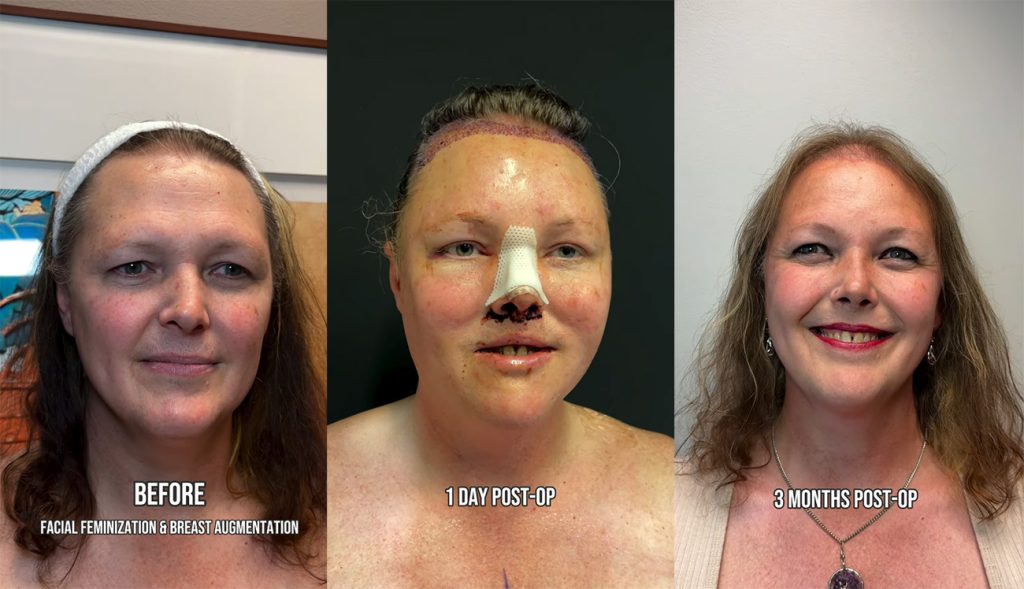
Swelling and bruising are normal after facial feminization surgery (FFS). Even small incisions can cause noticeable swelling because FFS often involves deeper work on bone and soft tissue. The good news is that most swelling follows a pattern. It usually gets worse for the first few days, then slowly improves.
If you’re preparing for the surgery or are currently recovering, this guide explains what is normal, what steps to take, and when to call your FFS surgeon.
Bruising and Swelling Timeline: What’s Normal After FFS?
Everyone heals at a different speed after FFS, but these patterns are common:
| Time Period | What to Typically Expect |
| Days 1-3 | Swelling and bruising increase, often peaking around day 2 or 3. |
| Week 1 | Significant bruising begins to fade from purple to green/yellow. Major swelling starts to slowly subside. |
| Weeks 2-3 | A major turning point. Most visible bruising is gone, and swelling decreases enough for many patients to feel comfortable in public. |
| Months 1-3 | Subtle swelling continues to resolve month by month. Your new facial contours become more defined and natural-looking. |
| Over 6 Months | Most of the remaining swelling settles, revealing the stable, long-term result of your surgery. |
Tips to Reduce Bruising and Swelling After FFS
These steps can help reduce bruising and swelling after facial surgery. Always follow your surgeon’s specific instructions first.
1. Use cold compresses early (first 48 hours)
Many FFS recovery guidelines recommend cold compresses during the first 48 hours. Here’s how you can apply it:
- Use a cold pack wrapped in cloth (never put ice directly on skin).
- Short sessions, several times a day.
- Avoid pressure on surgical sites.
After the first couple of days, your surgeon may switch you to warm compresses in certain situations. Do this only if your surgical care team says it’s okay.
2. Sleep with your head elevated
Keeping your head raised helps fluid drain away from your face. An easy setup can include a wedge pillow, recliner, or 2–3 pillows behind your head and upper back. Aim for elevation, especially during the first week.
3. Avoid heat early
Heat can increase swelling. For the first week, take lukewarm showers, avoid hot tubs and saunas, and do not use steam rooms. Warmth feels good, but it can slow healing early on.
4. Move gently, but don’t work out
Light movement improves circulation. But heavy lifting and intense activity can worsen swelling or increase bleeding risk. Focus on gradual activity increases based on your surgeon’s timeline.
You may be able to take short walks around your home several times a day, if cleared by your surgeon.
5. Watch what increases swelling
Swelling is fluid-related, so monitoring hydration and salt intake matters. Many post-facial-surgery guides encourage hydration and a lower-sodium diet to reduce fluid retention. Here are some simple steps:
- Drink water consistently.
- Choose low-salt meals.
- Avoid alcohol until cleared (it can worsen swelling and interfere with healing).
6. Don’t smoke or vape nicotine
Nicotine reduces blood flow and slows healing. It can increase the risk of complications after surgery, including infection.
What to Do Before Surgery to Reduce Bruising
Your pre-operative instructions are critical. In the weeks before FFS, your surgeon will provide a specific list of medications and supplements to avoid, as they can increase bleeding and bruising. Commonly restricted items include:
- Blood Thinners: Aspirin, ibuprofen (Advil, Motrin), naproxen (Aleve), and other NSAIDs.
- Certain Supplements: Vitamin E, fish oil, ginkgo biloba, garlic, ginseng, and St. John’s Wort.
- Other Medications: Some prescription blood thinners.
Always disclose everything you take, including prescription, over-the-counter, and herbal medicines, to your surgical team. Following these instructions carefully is one of the most effective steps you can take to reduce post-operative bruising.
How Different FFS Procedures Affect Swelling
Not all facial feminization procedures cause the same amount or type of swelling. For example:
- Jaw and chin contouring often leads to longer-lasting swelling because they involve deeper tissue and bone healing.
- Rhinoplasty can cause noticeable under-eye bruising and puffiness, even if the nose itself looks fine early on.
Your recovery timeline depends on the specific procedures you had, not just the fact that you underwent FFS.
When to Call Your Surgeon
Seek urgent guidance if you have:
- One-sided swelling that rapidly worsens
- Sudden severe pain
- Fever, spreading redness, or pus-like drainage
- Shortness of breath or chest pain
- Vision changes or severe eye pain
When in doubt, reach out to your surgeon. It’s always better to ask.
FAQs
When do I look normal after FFS?
Many patients feel presentable in public after 2–3 weeks. Final swelling can take several months to fully settle.
What to eat to speed up bruise healing?
You should eat protein-rich foods, fruits, and vegetables, and drink plenty of water to support healing. A balanced diet helps your body repair tissue more efficiently.
What do plastic surgeons recommend for bruising?
Surgeons often recommend cold compresses early, head elevation, and avoiding blood-thinning medications before and after surgery. Following aftercare instructions closely is important.
Are arnica or bromelain supplements helpful for bruising?
Some people use arnica or bromelain to try to reduce bruising. Only take them if your surgeon says it’s okay, since they can affect bleeding or interact with other medications.
Why is my swelling worse in the morning?
Swelling is often worse in the morning because fluid builds up while you are lying down. Sleeping with your head elevated and moving gently after waking up can help reduce it.
When can I start a gentle massage on swollen areas?
Do not massage surgical areas unless your surgeon tells you to. If massage is allowed, it is usually several weeks after surgery and must be done very gently.
Post-Op Care from Experienced Surgeons
Recovery is a highly personalized journey, and the most appropriate guidance comes from the team that knows your specific surgical plan. If you are preparing for FFS or are in the healing process and have questions, our experienced team at Feminization Surgeries can provide tailored support and clarity. Call us at (425) 541-1617 to book a consultation.