
- Understanding Facial Feminization Surgery
- Can Cis Women Get Facial Feminization Surgery?
- Why Cisgender Women Consider Facial Feminization Surgery?
- Facial Feminization Surgery Procedures for Cis Women
- Facial Feminization Surgery Before and After Results
- Facial Feminization Surgery Cost for Cis Women
- Is Facial Feminization Surgery Safe for Cis Women?
- How to Choose the Right Facial Feminization Surgery Surgeon?
- Why Patients Trust Dr. Javad Sajan for Facial Feminization Surgery?
- Thinking About Facial Feminization Surgery?
- FAQs
Most people hear “facial feminization surgery” and immediately think of transgender women. That association makes sense. FFS has been a life-changing procedure for thousands of trans women navigating gender dysphoria. But here’s something that often surprises people: cisgender women get facial feminization surgery too, and more of them are doing it than ever before.
If you’re a cis woman who has ever looked in the mirror and wished your jaw were softer, your forehead less prominent, or your overall face more balanced, you’re not alone. And no, pursuing facial feminization surgery doesn’t require a gender identity reason. It requires nothing more than a desire to look more like how you feel.
An overview of FFS for a cisgender woman, including which procedures apply, what results look like, how much it costs, and who to find.
Understanding Facial Feminization Surgery
The best Facial Feminization Surgery (FFS) is a combination of procedures that focuses on refining facial structure to create softer, more balanced features. Rather than being a single operation, it’s a combination of treatments that may involve reshaping bone, adjusting soft tissue, or subtly improving facial proportions.
Although FFS is often associated with gender affirming facial surgery, it isn’t limited to that purpose. More cisgender women are now exploring facial feminization surgery for cis women as a way to soften stronger features or bring more harmony to their overall appearance, without changing who they are.
At clinics like Feminization Surgeries, the emphasis is on a personalized approach. Each plan is designed to enhance your natural features, so the final result feels like a more refined version of you, rather than something dramatically different.
Can Cis Women Get Facial Feminization Surgery?
Yes, cisgender women are fully eligible candidates for facial feminization surgery. It is an elective cosmetic procedure, open to any patient who meets the health qualifications and has realistic expectations.
The surgical techniques involved, like brow bone reduction, jaw contouring, rhinoplasty, and hairline lowering, have no inherent connection to gender transition. They are structural modifications to the face. Several of the most common FFS procedures are already part of mainstream cosmetic surgery and performed on cis women every day, just under different names.
Some of the most common reasons include:
- Genetics: Naturally strong jawlines, prominent brows, or wider chins
- Facial asymmetry: Subtle imbalances that affect overall harmony
- Post-puberty changes: Bone structure that developed with more angular features
- Aging: Loss of softness in facial contours over time
- Personal preference: A desire for a softer, more balanced appearance
What changes when these procedures are approached through the lens of facial feminization is the intent and planning. An FFS surgeon thinks holistically; the goal isn’t to change one feature in isolation, it’s to create overall facial harmony. Every modification is considered in relation to everything else on the face.
Why Cisgender Women Consider Facial Feminization Surgery?
The reasons vary from woman to woman, and honestly, none of them need justification.
- Hormonal factors: Conditions like PCOS can influence facial features
- Genetics: Some features, like a strong jaw or brow, are simply inherited
- Aging: Changes over time can make the face look sharper or less balanced
- Being misgendered: Some women experience this due to more angular features
- Personal preference: Sometimes it’s just about wanting a softer look
Some women simply look in the mirror and want something different. That’s it. That’s enough.
Facial Feminization Surgery Procedures for Cis Women
No two consultations look the same because no two faces are the same. The procedures a surgeon recommends depend entirely on your face and what you want to change.
Here is what the most common FFS procedures actually involve, in plain terms.
Forehead Contouring
The forehead is often where the biggest difference shows. A more prominent brow ridge can create a heavier look, while a smoother forehead appears softer. In mild cases, the bone is reduced. In more pronounced cases, the bone may be reshaped and repositioned. The goal is the same: to create a smoother, more natural curve.
Brow Lift
A small shift in brow position can change the entire expression. A brow lift gently raises the eyebrows so they sit in a more natural position, helping the eyes look more open. It’s often done along with forehead work, but not always.
Brow Bone & Orbital Reduction
The brow bone and the upper edge of the eye sockets work together. If only one area is treated, the result can feel incomplete. When needed, both are adjusted so the upper face looks balanced, not like separate changes.
Rhinoplasty
The nose plays a big role in overall facial balance. A feminizing rhinoplasty usually focuses on refining the bridge, narrowing the structure, and shaping the tip so it fits better with the rest of the face. In this case, context matters – the nose was planned with other changes, not by itself.
Jaw Contouring
A wider, more angular jaw can give the face a stronger shape. Jaw contouring softens this by reshaping the lower edges of the bone and smoothing the corners. In some cases, the jaw muscles are also reduced if they add bulk.
Chin Reshaping (Genioplasty)
A masculine chin tends to be longer, wider, and more square at the base. A feminine chin is typically shorter, narrower, and comes to a softer point. Dr. Sajan repositions the bone and holds it in place with small screws, producing results that are both natural-looking and permanent.
Cheek Augmentation
High, full cheekbones read as distinctly feminine. For women whose cheeks are flatter or sit lower on the face, cheek augmentation adds volume using implants or fat grafting. The goal is to create a lifted midface and the characteristic triangle shape, wide at the cheekbones and tapering to the chin, that the eye naturally reads as feminine.
Lip Lift and Lip Feminization
Two things make lips read as feminine: the distance between the nose and the upper lip, and how much of the upper teeth show when the mouth is at rest. Women naturally have a shorter philtrum and tend to show a few millimeters of upper tooth when relaxed.
A lip lift removes a small strip of skin just beneath the nose, shortening that distance and giving the upper lip more visible shape and height. Lip filler can be added at the same time for volume. Most patients who want comprehensive lip feminization choose to do both together.
Hairline Lowering
A high hairline adds visual height to the forehead and makes the face read as longer and more masculine. Hairline lowering, also called scalp advancement, moves the hairline physically forward and reduces the forehead expanse. It is a change that affects how the entire face is proportioned, not just the forehead on its own.
Hair Transplant
If the hairline is uneven or thin, a transplant can help fill it in and create a softer shape. In some cases, this can be done during the same surgery, so you don’t need to come back for a separate procedure.
Tracheal Shave
Tracheal shave reduces the appearance of a more prominent Adam’s apple. It’s a relatively straightforward procedure and can be added if it’s something you’ve noticed and want to address.
Facial Feminization Surgery Before and After Results
When reviewing facial feminization surgery before and after results, the best outcomes are the ones that look natural.
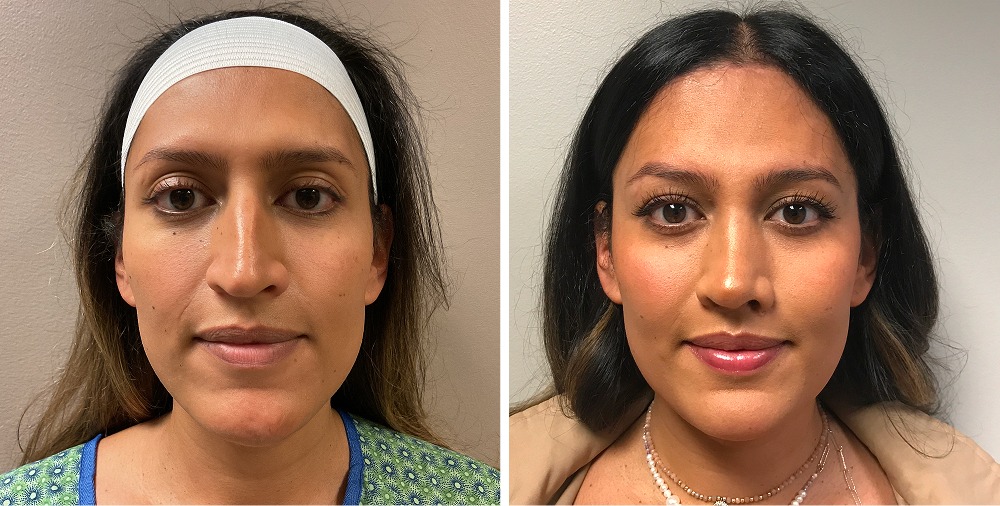
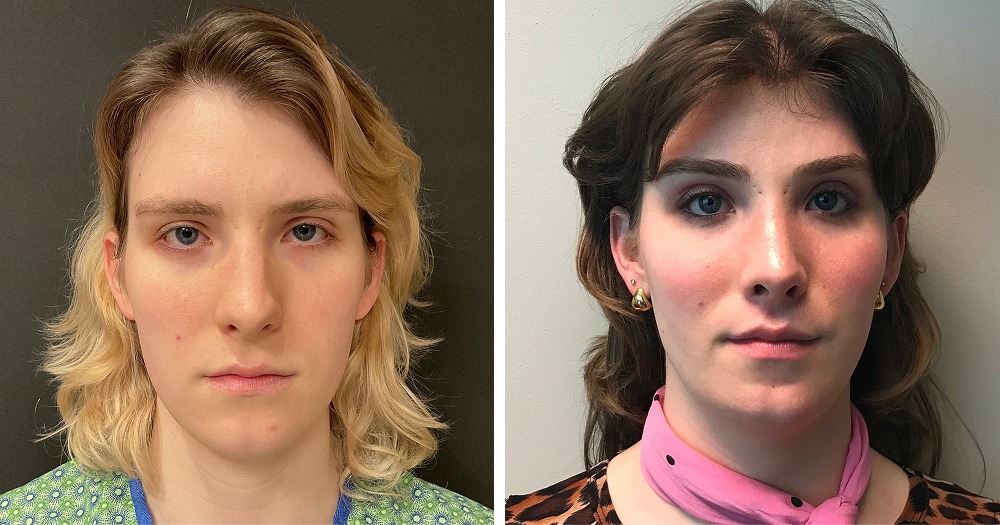
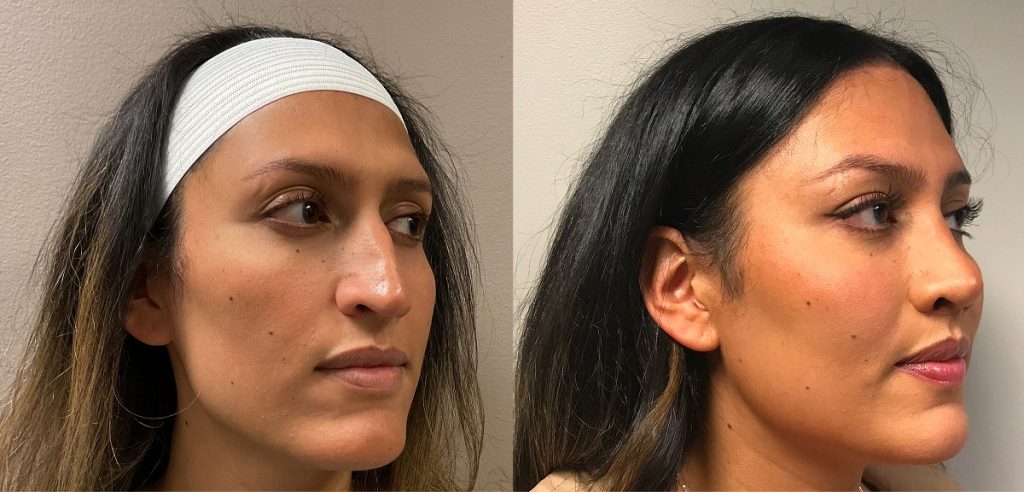
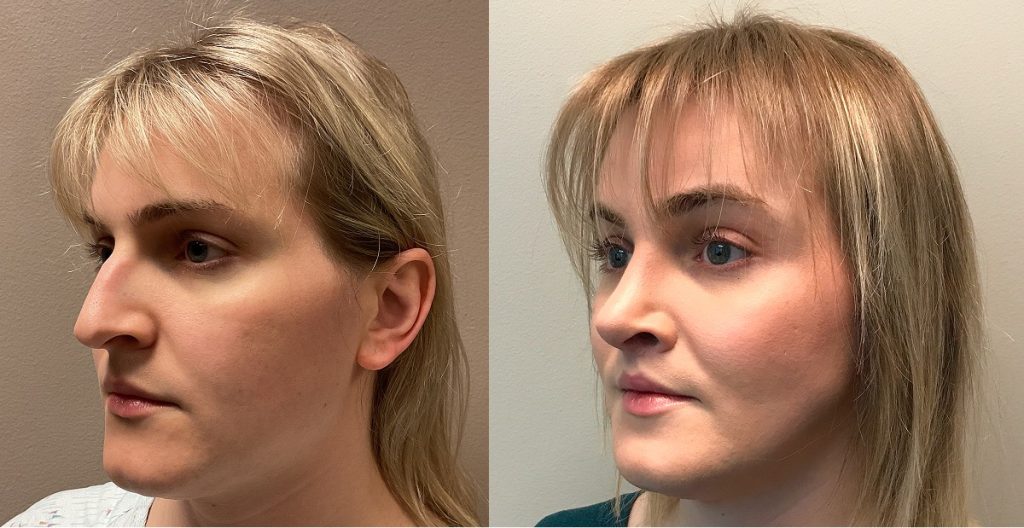
Healing takes time. While some changes are visible early, final results usually develop over 6 to 12 months as swelling fully resolves. Most importantly, realistic expectations play a main role; FFS enhances your features rather than completely transforming them.
Facial Feminization Surgery Cost for Cis Women
The facial feminization surgery cost and outcomes are the key section most patients quietly scroll to first, and that’s completely reasonable. FFS is a significant investment.
At Feminization Surgeries, pricing generally starts at around $35,000 and can go up to $70,000 or more, depending on the number and complexity of procedures.
To give you a general idea, pricing is often grouped by facial zones:
- Upper third (forehead, hairline, brow): typically ranges from $10,000 to $50,000
- Middle third (nose, cheeks): usually around $6,000 to $18,000
- Lower third (lips, jaw, chin, neck): can range from $4,500 to $50,000
These are general estimates and don’t include facility or anesthesia costs, which usually depend on how long the procedure takes. The best way to get a clear idea of pricing is through a consultation, where a personalized plan and a detailed cost breakdown can be provided based on your goals.
Insurance coverage
For cisgender women, facial feminization surgery is typically considered cosmetic, so insurance coverage is limited. However, it’s still worth checking your policy to understand what may or may not be included.
Is Facial Feminization Surgery Safe for Cis Women?
It’s a fair question, and one most people think about before seriously considering surgery.
In general, facial feminization surgery is considered safe when it’s done by a surgeon who has real experience with facial structure and contouring. The face is a complex area, so the planning and technique matter just as much as the procedure itself.
There are some risks, as with any surgery. You can expect swelling and bruising early on, and in some cases, things like infection or slight unevenness can happen while healing. Most of this settles over time, but it’s something your surgeon should walk you through clearly.
What really makes the difference is the level of expertise behind the procedure. A surgeon who understands both the aesthetic side and the underlying anatomy is better equipped to avoid complications and create balanced results.
Recovery also isn’t instant. Most people take a couple of weeks to feel comfortable getting back to normal routines, while the outcome continues to refine over the next few months.
How to Choose the Right Facial Feminization Surgery Surgeon?
Finding the right facial feminization surgery surgeon is probably the most important decision in this entire process.
Here’s what to actually look for when evaluating a surgeon:
Craniofacial and FFS-specific training: General plastic surgery training doesn’t automatically prepare a surgeon for facial bone restructuring. Look for surgeons who completed a fellowship specifically focused on facial feminization or craniofacial surgery, and who perform these procedures regularly.
Volume and specialization: A surgeon who performs FFS procedures every week develops an intuition for facial proportion and feminization aesthetics that simply can’t be replicated by someone who does it a few times a year. Ask directly how frequently they perform FFS and how many procedures they’ve completed.
Before and after galleries specific to FFS: Ideally, the before and after photos should depict patients with facial features similar to yours, not general galleries of rhinoplasty and facelifts. This gives you the most accurate read on what a surgeon’s work actually looks like in practice.
Natural-looking outcomes: The goal of FFS is to look like yourself, not like you’ve had extensive surgery. Look for results that achieve femininity without looking artificial or overdone.
A surgeon who listens: The consultation process should feel like a genuine conversation about your goals and your face. A good FFS surgeon will tell you what they recommend, explain why, and be honest about what will and won’t achieve what you’re looking for.
Why Patients Trust Dr. Javad Sajan for Facial Feminization Surgery?
Patients trust Dr. Javad Sajan for facial feminization because of his focused experience, specialized training, and consistent approach to individualized care. He is known for building each surgical plan around the patient’s facial structure and goals, with an emphasis on natural-looking balance rather than a standard or repetitive outcome.
Dr. Sajan is a plastic surgeon who completed dedicated fellowship training in facial feminization surgery. His practice is centered on FFS, and he has performed thousands of procedures ranging from subtle refinements to more complex facial bone restructuring. His background in areas such as the forehead, jaw, and chin allows him to approach both aesthetic and structural concerns with precision.
Another reason patients choose Dr. Sajan is the overall approach of his practice. From detailed surgical planning and the option for comprehensive procedures in a single session, to virtual consultations for patients traveling from outside the area, the focus remains on accessibility and thoughtful care.
For those considering a facial feminization surgery surgeon, this combination of experience, planning, and individualized attention can make a meaningful difference.
Non-Surgical Alternatives
Surgery isn’t for everyone, and that’s okay. There are a few non-surgical options that can help soften features and improve facial balance, especially if you’re looking for subtle changes.
- Fillers: Add volume to areas like the cheeks or lips to create a softer, more contoured look
- Botox: Helps relax muscles that contribute to a heavier or more angular appearance, especially around the forehead and jaw
- Skin tightening treatments: Improve skin firmness and overall texture, which can enhance facial definition
- Thread lifts: Provide a mild lifting effect without surgery, helping reposition certain areas of the face
These treatments are less invasive and require little to no downtime, but the results are temporary and typically need maintenance over time.
Thinking About Facial Feminization Surgery?
If you’re a cisgender woman who has spent years feeling like certain features don’t quite belong on your face, you now know that there are real, permanent, well-established options for changing that.
Getting a consultation is a good way to learn what the process of facial feminization surgery entails, from planning to recovery. It gives you the chance to ask questions, explore your options, and see what approach might work best for you.
You can call (206) 990-0060 or reach out to Feminization Surgeries online to schedule an appointment. Virtual consultations are also available if you’re not in the Seattle area, making it easier to connect from wherever you are.
FAQs
Yes. Many cis women consider it for different reasons; sometimes it’s about softening stronger features, other times it’s just wanting a more balanced look overall. It’s not tied to gender identity. If you’re healthy and clear about what you want, it’s something you can explore.
No. That’s a common assumption, but the procedures themselves, like brow work, jaw contouring, or rhinoplasty, are the same no matter who’s having them. Cis and non-binary patients choose these treatments as well.
The first couple of weeks are usually the toughest, especially with swelling and general discomfort. Things start settling after that. Most people feel okay being out in public around the 3–4 week mark. Work depends on what you do, but many return within a few weeks. Final results take longer as swelling fully goes down.
In most cases, yes. Changes made to bone and structure are long-lasting, although natural aging will continue over time. Procedures like jaw or forehead reshaping don’t reverse. Softer tissue can change a bit over time with aging, but that’s normal for everyone.