
- What Actually Determines Your Jawline Shape?
- 15 Exercises for Sharper Jawline
- 8 Non-Surgical Procedures for a Sharper Jawline
- 3 Minimally Invasive Procedures for Jawline Definition
- 4 Surgical Procedures for a Sharper Jawline
- Exercises vs. Procedures: Which Is Right for You?
- Sharper vs. Softer: Jawline Goals in Facial Feminization
- What Does Facial Feminization Plans Include?
- What to Realistically Expect
- Ready to Explore Jawline Contouring?
- FAQs
A sharper jawline is one of the most requested facial aesthetic goals as it can make the lower face look more defined, balanced, and youthful. For some people, the goal is a stronger, more angular jaw. For others, especially transgenders or cisgenders searching for facial feminization, the goal may be a slimmer, softer, tapered V-line jaw rather than a square or heavy jaw.
The jawline is not shaped by one factor alone. Bone structure, masseter muscle size, fat under the chin, skin laxity, posture, and aging all affect how defined the lower face looks. That is why the best approach may include exercises, lifestyle changes, non-surgical treatments, or surgery, depending on the person’s anatomy and goals.
This article shares 30 ways to help you get a sharper jawline, including 15 exercises and 15 non-surgical and surgical treatments. It also includes options designed for facial feminization.
What Actually Determines Your Jawline Shape?
A sharper jawline depends on four main factors:
1. Bone Structure
The mandible, or lower jawbone, creates the foundation of the jawline. A wider mandibular angle can make the jaw look stronger and more square. A narrower or tapered mandible can create a softer V-shaped lower face.
The gonial angle, which is the angle at the back corner of the jaw, plays a major role. Research discussed in aesthetic surgery literature has noted that ideal jaw angles can differ by gender presentation. A more defined masculine jaw is often associated with an angle near 130 degrees, while a more feminine lower face may fall closer to 120 to 125 degrees, depending on the overall facial structure.
2. Masseter Muscle Size
The masseter muscles sit on each side of the jaw and help with chewing. Larger masseters can make the jaw look wider or more square. Smaller or relaxed masseters may create a slimmer lower face.
3. Subcutaneous Fat
Fat under the chin and along the jaw can hide the jawline. This is why some people do not see definition even when they have strong bone structure.
4. Skin Laxity
Loose skin can blur the jawline, especially with age, weight changes, or reduced collagen. Skin tightening treatments may help when laxity is the main concern.
15 Exercises for Sharper Jawline

Jawline exercises can strengthen the masseter, platysma, digastric, and surrounding facial muscles. They cannot reshape bone, remove large fat deposits, or replace surgery, but they may improve muscle tone, posture, and the appearance of the neck-jaw angle over time.
For best results, perform the below exercises consistently for 8 to 12 weeks. Stop if there is jaw pain, clicking, headaches, or symptoms of TMJ disorder. Anyone with jaw joint problems should consult a dentist, physician, or qualified healthcare provider first.
1. Jawline Clenches
Jawline clenches are an isometric exercise where the jaw muscles are gently tightened without chewing or moving the jaw aggressively. This helps activate the muscles that define the sides of the jaw.
Target muscle: Masseter muscles on both sides of the jaw.
Reps/Sets: Hold a gentle clench for 5 seconds, then relax. Repeat 10 to 15 times for 2 sets.
Difficulty: Easy
How to do it: Sit upright, keep the lips closed, and gently press the teeth together. Do not bite hard. Hold the tension briefly, then release fully.
2. Chin Tucks
Chin tucks are posture exercises that move the head back into better alignment. They can improve the jaw-neck angle by reducing forward head posture.
Target muscle: Deep neck flexors and muscles that support jaw-neck posture.
Reps/Sets: Do 10 to 12 reps for 2 to 3 sets.
Difficulty: Easy
How to do it: Sit or stand tall. Pull the chin straight back as if making a double chin. Keep the eyes level and hold for 3 to 5 seconds.
3. Tongue Press
The tongue press uses the tongue to activate the under-chin muscles. It can help improve the firmness of the area beneath the jaw.
Target muscle: Suprahyoid muscles and muscles under the chin.
Reps/Sets: Hold for 5 seconds, repeat 10 to 15 times for 2 sets.
Difficulty: Easy
How to do it: Press the entire tongue against the roof of the mouth. Keep the jaw relaxed and breathe through the nose.
4. Fish Face or Cheek Sucks
This exercise pulls the cheeks inward to engage the midface and lower-face muscles. It may help tone the cheeks and improve facial control.
Target muscle: Buccinator and zygomatic muscles.
Reps/Sets: Hold for 5 to 10 seconds, repeat 10 times for 2 sets.
Difficulty: Easy
How to do it: Suck the cheeks inward and hold the “fish face” position. Try to smile slightly while holding the cheeks in.
5. Neck Rolls with Resistance
Neck rolls with light resistance help strengthen and stretch the muscles around the jaw, neck, and lower face.
Target muscle: Platysma, sternocleidomastoid, and neck stabilizers.
Reps/Sets: Perform 5 slow rolls each direction for 2 sets.
Difficulty: Moderate
How to do it: Sit tall and slowly roll the neck from side to side. Add light hand resistance only if comfortable. Avoid fast circular motions.
6. Mewing or Correct Tongue Posture
Mewing is a tongue posture technique popularized by orthodontist Dr. John Mew. It involves resting the tongue against the palate instead of letting it sit low in the mouth.
Target muscle: Tongue, suprahyoid muscles, and oral posture muscles.
Reps/Sets: Practice throughout the day as a resting posture.
Difficulty: Moderate
How to do it: Place the full tongue on the roof of the mouth, keep lips closed, and breathe through the nose. Evidence for major adult bone change is limited, but better tongue posture may improve oral posture and facial appearance.
7. Digastric Muscle Activation
This exercise works the muscle under the chin that helps define the separation between the chin and neck.
Target muscle: Digastric muscle and under-chin muscles.
Reps/Sets: Do 10 reps for 2 sets.
Difficulty: Moderate
How to do it: Place a fist or fingers under the chin. Try to open the mouth while gently resisting with the hand. Keep the movement slow and controlled.
8. The Vowel Exercise
The vowel exercise uses exaggerated facial movements to activate the jaw, lips, and lower-face muscles.
Target muscle: Perioral muscles, jaw muscles, and facial expression muscles.
Reps/Sets: Repeat A, E, I, O, U for 3 rounds.
Difficulty: Easy
How to do it: Say each vowel slowly with exaggerated mouth movement. Keep the neck long and avoid forcing the jaw open.
9. Platysma Pull-Down
The platysma pull-down targets the thin muscle that runs from the jaw down the neck. It may help improve neck firmness and jawline visibility.
Target muscle: Platysma muscle.
Reps/Sets: Hold for 5 seconds, repeat 10 to 12 times for 2 sets.
Difficulty: Moderate
How to do it: Tilt the head slightly back. Pull the corners of the mouth downward until the neck tightens. Hold, then relax.
10. Jaw Resistance Training with Mastic Gum
This exercise uses controlled chewing to strengthen the jaw muscles. Mastic gum, a natural Greek resin, is often used because it is firmer than regular gum.
Target muscle: Masseter and chewing muscles.
Reps/Sets: Chew for 5 to 10 minutes, 3 to 4 times per week.
Difficulty: Moderate
How to do it: Chew slowly and evenly on both sides. Do not overdo it. A 2019 study in Scientific Reports found that harder chewing activity may influence bone and muscle adaptation, but excessive chewing can worsen TMJ symptoms.
11. Forward Head Posture Correction
Poor posture can make the chin look recessed and soften the jaw-neck angle. This exercise combines chin tucks with wall angels.
Target muscle: Deep neck flexors, upper back, and postural stabilizers.
Reps/Sets: Do 10 chin tucks and 10 wall angels for 2 sets.
Difficulty: Easy
How to do it: Stand with your back against a wall. Tuck the chin, then raise and lower the arms like a wall angel while keeping the ribs down.
12. Myofascial Release for the Jaw
Myofascial release is a self-massage technique that relaxes tight jaw muscles and may reduce puffiness caused by tension or fluid retention.
Target muscle: Masseter, temporalis, and tissue along the mandible.
Reps/Sets: Massage for 2 to 3 minutes per side.
Difficulty: Easy
How to do it: Use the knuckles or fingertips to massage from the cheekbone down to the jaw angle. Use gentle pressure and avoid pressing directly on painful areas.
13. Diaphragmatic Breathing and Jaw Relaxation
This exercise reduces chronic jaw tension, which can contribute to clenching and masseter enlargement.
Target muscle: Jaw relaxers, breathing muscles, and nervous system regulation.
Reps/Sets: Practice for 3 to 5 minutes daily.
Difficulty: Easy
How to do it: Place the tongue gently on the roof of the mouth, let the teeth separate, and breathe deeply into the belly. Keep the shoulders relaxed.
14. Lion Pose
Lion Pose, or Simhasana, is a yoga-based facial stretch that opens the mouth, stretches the tongue, and activates the lower face.
Target muscle: Tongue, platysma, facial expression muscles, and jaw muscles.
Reps/Sets: Hold for 5 seconds, repeat 5 to 8 times.
Difficulty: Easy
How to do it: Open the mouth wide, stretch the tongue downward, widen the eyes, and exhale strongly. Relax fully between reps.
15. Resistance Band Neck Extension
This exercise strengthens the posterior neck, which can improve posture and make the jawline look more defined in profile.
Target muscle: Posterior neck muscles and upper back stabilizers.
Reps/Sets: Do 10 to 12 reps for 2 sets.
Difficulty: Advanced
How to do it: Anchor a light resistance band safely behind the head. Move the head gently backward against the band, then return to neutral. Keep the motion slow.
ALSO READ: What Procedures Are Included in Jawline Feminization Surgery
8 Non-Surgical Procedures for a Sharper Jawline

Non-surgical treatments are best for people with mild to moderate concerns, such as early jowling, small fat pockets, volume loss, or a wide jaw caused by enlarged masseter muscles. Results vary, and treatments should be performed by qualified medical professionals.
1. Dermal Fillers for Jawline Contouring
Dermal fillers can add structure along the mandibular border, chin, and jaw angles. Hyaluronic acid fillers are commonly used and usually last 12 to 18 months.
A skilled injector may also treat the prejowl sulcus, which is the small hollow beside the chin that can make early jowling look worse. Filling this area can create a smoother, sharper lower-face line.
Best for: Mild jawline definition, chin-jaw balance, early jowls
Downtime: Minimal
Results: Immediate, with final settling in 1 to 2 weeks
2. Botox for Masseter Reduction
Masseter Botox can slim the lower face by relaxing enlarged chewing muscles. This is especially helpful for patients who want a softer, more feminine V-shaped jawline.
Repeated treatments may lead to partial muscle atrophy over time. Many patients need 2 to 3 sessions spaced several months apart for more sustained jaw slimming.
Best for: Wide jaw from large masseter muscles
Downtime: Minimal
Results: 4 to 8 weeks
3. Kybella
Kybella uses deoxycholic acid to dissolve small to moderate fat pockets under the chin. Reducing submental fat can improve the jaw-neck angle and make the jawline look cleaner.
Best for: Fullness under the chin
Downtime: Patients might feel swelling for several days to weeks
Results: Gradual over several treatments
4. PDO Thread Lift
PDO threads use dissolvable barbed sutures to lift loose tissue along the jawline. Threads can improve mild jowling and create a more defined border.
Best for: Mild to moderate jowls
Downtime: Mild swelling or bruising
Results: Often 12 to 18 months
5. Ultherapy or HIFU
Ultherapy and high-intensity focused ultrasound treatments target deeper tissue layers to stimulate collagen. These treatments can tighten the jawline without incisions.
Best for: Mild skin laxity
Downtime: Minimal
Results: Gradual over 2 to 3 months
6. Radiofrequency Microneedling
Radiofrequency microneedling, including devices such as Morpheus8, can tighten skin and target small areas of subdermal fat. This dual effect makes it useful for the jowl and submandibular area.
Best for: Mild laxity, texture, and small fat pockets
Downtime: 1 to 5 days
Results: Gradual over several weeks
7. Cryolipolysis for Chin and Jawline
Cryolipolysis, commonly known as fat freezing, can reduce fat under the chin. It is non-surgical and works best for patients with pinchable fat and good skin elasticity.
Best for: Submental fat
Downtime: Minimal
Results: 1 to 3 months
8. Profhilo or Bioremodeling Injections
Profhilo is relatively new and is not a traditional filler. It spreads through the skin and supports hydration, collagen, and elastin production. It may improve skin quality and firmness along the lower face.
Best for: Crepey skin and early laxity
Downtime: Minimal
Results: Several weeks
3 Minimally Invasive Procedures for Jawline Definition
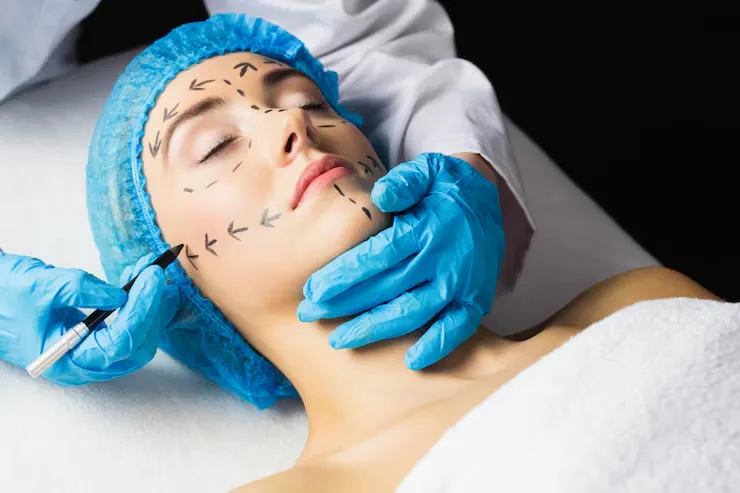
These treatments involve small incisions or targeted fat removal. They usually provide more noticeable results than non-surgical treatments but less downtime than major surgery.
1. Submental Liposuction
Submental liposuction removes fat under the chin through small incisions. It can dramatically sharpen the jaw-to-neck angle when fat is the main concern.
Best for: Double chin or stubborn under-chin fat
Downtime: About 1 to 2 weeks
Results: Long-lasting if weight is stable
2. Buccal Fat Removal
Buccal fat removal removes part of the Bichat fat pads inside the cheeks. It can create a more sculpted, hollowed lower face.
However, this procedure should be approached carefully. There has been increased public discussion and expert caution since 2023 because over-removal can make the face look gaunt as natural aging reduces facial volume.
Best for: Full cheeks with good facial volume
Downtime: 1 to 2 weeks
Results: Permanent
3. Neck Liposuction with Skin Tightening
Laser-assisted liposuction, sometimes called SmartLipo, removes fat and uses thermal energy to tighten the overlying skin. It may be helpful when there is fat plus mild skin laxity.
Best for: Fat under the chin with mild looseness
Downtime: 1 to 2 weeks
Results: Long-lasting
4 Surgical Procedures for a Sharper Jawline
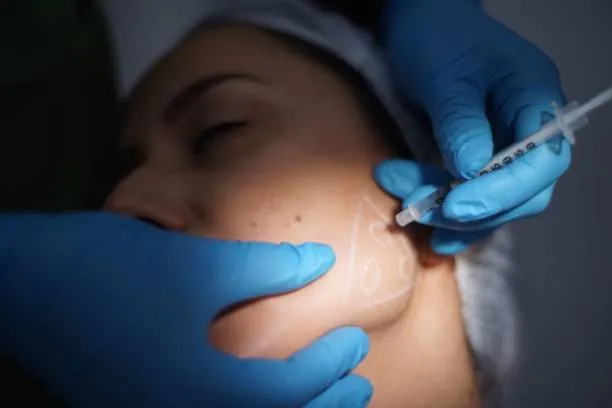
Surgical procedures are best for patients who want permanent structural change, stronger jaw angles, a more balanced chin, or jawline feminization. Moreover, transgenders looking for male to female (MTF) or Female to male (FTM) jawline surgery should always plan with a highly experienced facial surgeon like Dr. Javad Sajan, who has extensive experience and understands facial anatomy, gender goals, and proportion.
1. Jaw Implants
Jaw implants, including mandibular angle implants, add width and structure to the back corners of the jaw. They are often used for patients who want a more chiseled, angular jawline.
Smaller or custom implants may also be used to improve chin-jaw harmony without making the face look overly square.
Best for: Weak jaw angles or lack of structure
Downtime: Several weeks
Results: Long-lasting
2. Genioplasty
Genioplasty is chin surgery that moves the chin bone forward, backward, upward, downward, or side to side. Since the chin and jawline work together, improving chin position can make the entire lower face look more balanced.
Unlike a chin implant, sliding genioplasty can also reduce chin height or correct asymmetry. This can be especially relevant for facial feminization patients who want a softer, shorter, or more tapered chin.
Best for: Chin imbalance, recessed chin, asymmetry, facial feminization
Downtime: Several weeks
Results: Permanent
3. Jaw Reduction or Mandible Contouring Surgery
Jaw reduction surgery reshapes the mandibular angle and lower jaw to create a smoother, slimmer, or more tapered jawline. This is one of the most important procedures in facial feminization surgery because a heavy or square jaw can contribute to a more traditionally masculine lower face.
During jaw contouring, the surgeon may reduce the jaw angles, smooth the mandibular border, and create a more refined lower-face shape. The goal is not always to make the jaw “sharper” in the masculine sense. For many feminization patients, the goal is a defined but softer jawline that blends naturally with the cheeks, chin, and neck.
Who are the Good candidates for a Jaw reduction or Mandible Contouring Surgery ?
Usually patients with a wide lower jaw, prominent jaw corners, facial imbalance, or gender dysphoria related to lower-face shape. A consultation and imaging helps determine whether the jaw width comes from bone, muscle, fat, or a combination.
What does recovery look like?
Swelling is expected and may be most noticeable in the first few weeks. Many patients return to light activity within several weeks, while final contour refinement can take 3 to 6 months as swelling continues to improve.
At Feminization Surgeries, Dr. Javad Sajan evaluates the full face rather than treating the jaw in isolation. Jawline feminization may be combined with chin surgery, hairline procedures, forehead contouring, rhinoplasty, or other facial feminization procedures when appropriate.
Best for: Wide or square jaw, jawline feminization, permanent contour change
Downtime: Several weeks
Results: Permanent
4. Orthognathic Surgery
Orthognathic surgery, or corrective jaw surgery, repositions the upper jaw, lower jaw, or both. It is used when jaw alignment affects bite, chewing, breathing, speech, facial balance, or profile.
This procedure can have both functional and cosmetic benefits. If bite correction is the main reason for treatment, insurance may sometimes cover part of the procedure.
Best for: Jaw misalignment, bite problems, major skeletal imbalance
Downtime: 6 to 8 weeks or longerResults: Permanent
Exercises vs. Procedures: Which Is Right for You?
Different jawline goals often require different approaches, ranging from simple exercises to advanced surgical contouring procedures.
| Goal | Best Approach |
| Mild toning and definition | Exercises, mewing, posture correction |
| Fat reduction under chin | Kybella, CoolSculpting, submental liposuction |
| Skin laxity and jowling | PDO threads, Ultherapy, radiofrequency microneedling |
| More prominent jaw angles | Dermal fillers or jaw implants |
| Slimmer, feminine V-line jaw | Masseter Botox plus jaw reduction surgery |
| Significant structural change | Genioplasty or orthognathic surgery |
Sharper vs. Softer: Jawline Goals in Facial Feminization
A sharper jawline does not mean the same thing for every patient. Some people want a strong, angular lower face. Others want a better definition with a softer and more feminine contour.
A traditionally masculine jaw is often wider, heavier, and more angular at the mandibular angles. A traditionally feminine jaw is usually smoother, narrower, and more tapered toward the chin. For trans women and non-binary patients, the goal may be to reduce jaw width while keeping the lower face elegant and balanced.
What Does Facial Feminization Plans Include?
A feminization plan may include:
- Masseter Botox to slim muscle-related width
- Jaw reduction surgery to soften square jaw angles
- Genioplasty to refine chin shape and projection
- Fillers for small contour adjustments
- Skin tightening or liposuction if fat or laxity affects definition
Patients can learn more through the Jawline Feminization, Facial Feminization, and Virtual Consultation pages on the Feminization Surgeries website.
What to Realistically Expect
Understanding timelines helps patients set appropriate expectations and maintain motivation.
Exercises: Visible toning typically appears after 8 to 12 weeks of consistent practice. Results are subtle and primarily involve muscle definition rather than structural change. Exercises work best as a maintenance tool or for individuals with mild definition goals.
Non-surgical procedures: Most non-surgical treatments show visible results within 1 to 4 weeks. Fillers provide immediate results, while collagen-stimulating treatments like Ultherapy and radiofrequency microneedling develop gradually over 2 to 3 months.
Surgical procedures: Full recovery from surgical jawline procedures typically requires 4 to 8 weeks, with final results visible at 3 to 6 months as swelling completely resolves. Patients should plan for time off work and avoid strenuous activity during recovery.
Combination of procedures gives the best results:
For example, pairing jaw reduction surgery with masseter Botox and strategic filler placement offers bone structure, muscle size, and soft tissue contours simultaneously, creating comprehensive jawline improvement.
Ready to Explore Jawline Contouring?
A sharper jawline can come from exercises, injectables, skin tightening, liposuction, or surgery. The best option depends on whether the concern is muscle, fat, skin, bone, or facial proportion. To discuss a personalized plan, book a virtual consultation with Dr. Javad Sajan at Feminization Surgeries and learn whether surgical or non-surgical jawline contouring is right for your goals.
FAQs
Exercises can improve muscle tone, posture, and the appearance of the jaw-neck angle. They cannot change the shape of the jawbone or remove significant fat.
Most hyaluronic acid jawline fillers last about 12 to 18 months. Longevity depends on the filler type, metabolism, placement, and amount used.
Yes. Jaw reduction surgery permanently reshapes the jawbone. Aging, weight changes, and skin laxity can still affect the appearance of the lower face over time.
Dermal filler can create immediate definition. Submental liposuction can provide a more dramatic change if under-chin fat is the issue. Surgery is best for permanent structural change.
Weight loss can help if facial fat or under-chin fat is hiding the jawline. However, weight loss will not change bone structure, muscle size, or loose skin.
Jawline sharpening usually means creating more definition. Jaw feminization focuses on making the lower face softer, slimmer, and more tapered while maintaining natural balance.
Masseter Botox is commonly used, but it should be performed by an experienced injector. Long-term use may reduce muscle size, and dosing should be individualized to avoid over-slimming or bite changes.
A good candidate may have a wide jaw, square mandibular angles, chin imbalance, or facial dysphoria related to lower-face shape. A consultation with an experienced surgeon is needed to confirm the safest and most effective plan.