
- What Is Jawline Feminization Surgery?
- What Procedures Are Included in Jawline Feminization?
- Do You Need All of These Procedures?
- How Does a Surgeon Decide Which Procedures You Need?
- Can Jaw Reduction and Chin Reduction Be Done Together?
- What Happens During FFS Jaw Surgery?
- What Is Recovery Like After Jawline Feminization?
- How Jawline Feminization Before and After Result Look Like?
- What Are the Risks?
- Is Jawline Feminization Permanent?
- Jawline Feminization Surgery vs. Masseter Botox
- How Dr. Javad Sajan Approaches Jawline Feminization
- Exploring Jawline Feminization
- FAQs
During facial feminization procedure, a surgeon would recommend getting a Jawline surgery. Some believe that it is a single surgery, but it’s not. Jawline feminization surgery is a group of operations done from cheek to chin. The exact combination depends on the width, shape, projection, and proportions of the lower face.
Not every patient needs every procedure. Some benefit from a single technique, while others achieve balanced results by combining two or three. A surgeon determines the right plan by examining what is creating fullness or angularity in the lower face such as the bone, muscle, or both.
This article explains each of the jawline feminization procedures, how they work together, and how a surgeon decides which ones fit your anatomy and goals.
What Is Jawline Feminization Surgery?
Jawline Feminization is a set of surgical techniques that reshape the lower third of the face. While facial feminization surgery can involve the forehead, brow, nose, and lips, jaw feminization surgery focuses specifically on the mandible and chin. The goal is to reduce excessive width and sharp angularity so the lower face transitions smoothly from the ear toward the chin and neck.
A feminine jawline is typically narrower, with softer corners and a more tapered shape. Rather than changing your identity, lower face feminization refines the underlying structure so your features read as balanced and natural from every angle.
What Procedures Are Included in Jawline Feminization?
Jawline feminization is not one single operation. Depending on facial anatomy and treatment goals, a surgeon may use one procedure or combine several. Here are the core jawline feminization procedures.
Jaw Reduction
Jaw Reduction decreases excessive width and prominence in the lower jaw by reshaping the bone itself. This is different from losing facial fat, which does not change skeletal structure. When a broad or square jaw comes from the bone, only bone contouring produces a meaningful change. Square jaw reduction can involve the back corners of the jaw, the sides, or both, and the appropriate technique depends on where the width sits and how the bone is shaped.
Mandibular Angle Reduction
The mandibular angle is the corner of the jaw below the ear, where the vertical and horizontal portions of the mandible meet. Prominent or flared angles are one of the most common reasons a jaw appears square from the front and sharp in profile.
Mandibular Angle Reduction removes or reshapes bone at this corner, softening the transition from the side of the face toward the chin. Because the angles are visible from multiple views, symmetry matters. Controlled, measured bone reduction on both sides helps keep the result even and prevents over-resection, which can flatten the jawline rather than soften it.
Mandibular Body Contouring
The mandibular body is the long portion of the lower jaw running between the angle and the chin. Even after the angles are reduced, a thick or flared mandibular body can keep the lower face looking wide. Mandibular body reduction thins and smooths this segment so the jawline tapers gradually instead of stepping down abruptly.
This step is often performed together with angle reduction. Treating the angle, body, and chin as one continuous line, rather than isolated spots, produces a smoother result and avoids visible irregularities along the border of the jaw.
Chin Reduction and Chin Contouring
The chin and jaw work as a unit, which is why chin feminization is frequently part of the plan. Reducing only the jaw may not create balanced facial proportions if the chin remains wide, long, or overly projected. Chin Reduction can address four dimensions:
- Width: narrowing a broad or squared chin
- Height: shortening a vertically long chin
- Projection: setting back a chin that extends too far forward
- Shape: rounding a flat or angular chin point
Chin narrowing in particular helps the lower face taper toward a softer point, which is a defining trait of a feminine lower facial third. Chin contouring may involve shaving and reshaping the bone or repositioning it, depending on what needs to change.
Reduction Genioplasty
Genioplasty is the surgical term for reshaping or repositioning the chin bone. Reduction genioplasty is a specific version that cuts and moves or removes a segment of the chin to reduce its height, width, or forward position.
The relationship is simple: chin reduction is the goal, and reduction genioplasty is one surgical technique used to achieve it. For minor width concerns, contouring the outer surface of the bone may be enough. For a chin that is too tall or too projected, a genioplasty allows the surgeon to reposition the bone itself. The right approach depends entirely on individual anatomy.
Masseter Muscle Reduction or Masseter Botox
Not all lower-face width comes from bone. The masseter is a chewing muscle at the back of the jaw, and in some people this muscle is enlarged enough to add noticeable bulk. Bone reduction will not remove muscle volume, so masseter muscle reduction is considered when muscle is a contributing factor.
Masseter Botox is a non-surgical option that temporarily relaxes the muscle, allowing it to slim over several weeks. It is important to understand that this is not a surgical jaw procedure. It is an optional adjunct, and its effects fade over time unless treatment is repeated. Surgical options for the muscle exist but are used selectively.
Do You Need All of These Procedures?
It depends. Some patients need only mandibular reduction. Others benefit from combining jaw and chin work. Some have prominent angles as their main concern, while others have width driven primarily by muscle rather than bone.
How Does a Surgeon Decide Which Procedures You Need?
During evaluation, a surgeon assesses several factors:
- Jaw width and shape: how broad the mandible is from the front and where the width concentrates
- Mandibular angle prominence: whether the corners of the jaw flare outward or downward
- Chin dimensions: width, height, and projection relative to the rest of the face
- Muscle versus bone: whether masseter bulk contributes to lower-face fullness
- Overall facial proportions: how the lower third relates to the midface and forehead
The assessment typically includes a physical examination, facial photographs, frontal and profile analysis, and a dental or bite evaluation when relevant. CT imaging may be used for surgical planning, since it shows bone thickness and the position of nerves inside the mandible.
Can Jaw Reduction and Chin Reduction Be Done Together?
Yes. When both the jaw and chin contribute to lower-face width or length, combining the procedures in a single surgery creates a smoother, continuous contour from the angle to the chin point. Treating both areas at once also means one anesthesia session and one recovery period. That said, combining procedures is an option, not a requirement, and many patients need only one area addressed.
What Happens During FFS Jaw Surgery?
FFS jaw surgery follows a structured process. After surgical planning based on your examination and imaging, the procedure is performed under general anesthesia. Incisions are typically placed inside the mouth, which keeps scars hidden. The surgeon then performs the planned bone contouring along the angle, body, or both, and reshapes the chin when needed. Incisions are closed with dissolvable stitches, and recovery begins immediately after.
What Is Recovery Like After Jawline Feminization?
Recovery follows a gradual timeline, and the pace varies with the procedures performed.
- First week: Swelling and bruising peak. A liquid or soft-food diet is needed, along with prescribed oral rinses to keep incisions clean.
- Weeks 2 to 3: Swelling begins to decrease. Most patients return to non-strenuous work and daily routines.
- Weeks 4 to 6: Healing continues. Normal eating and activity resume as cleared by the surgical team.
- 3 to 12 months: Residual swelling settles and the final jawline contouring result becomes fully visible.
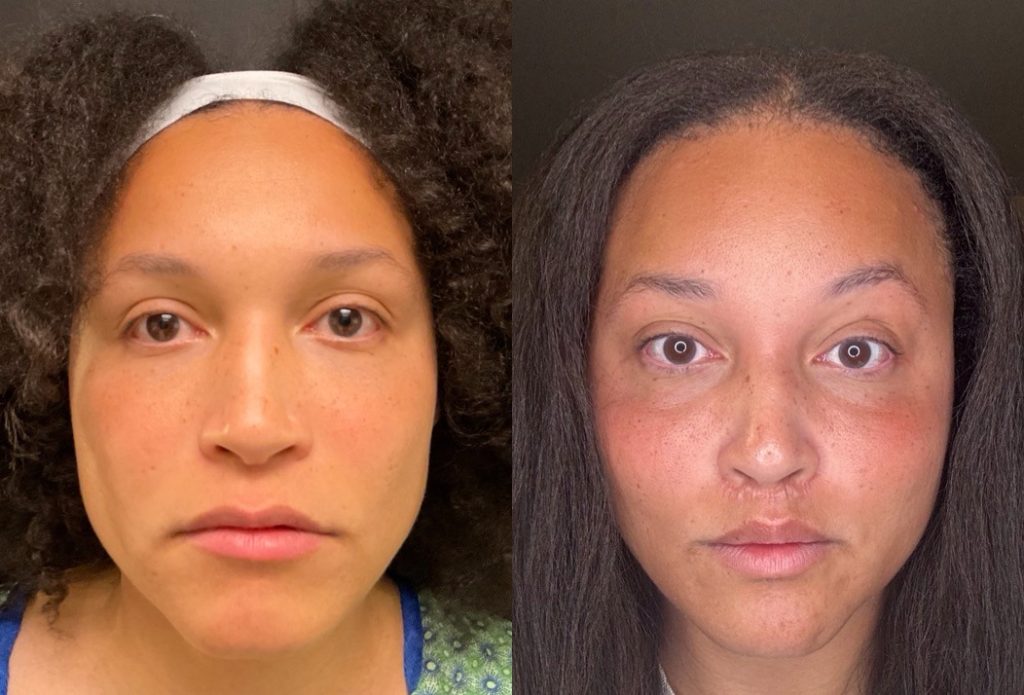
How Jawline Feminization Before and After Result Look Like?
The results of the surgery become clearer once initial swelling resolves, typically within 3 to 12 months. Before surgery, patients often have a wide or square jaw, flared mandibular angles, or a chin that’s too wide, long, or projected. After healing, the lower face typically shows a narrower, more tapered contour with a smoother transition from the jaw angle to the chin point. Since jawline contouring results are permanent once the bone has healed, before-and-after comparisons offer a reliable way to see the lasting impact of the procedure.
What Are the Risks?
As with any surgery, risks include swelling, bruising, bleeding, infection, temporary numbness, changes in sensation, asymmetry, and in some cases the need for revision. The mandible contains important nerves, including the nerve that supplies feeling to the lower lip and chin, so careful surgical planning and nerve protection are essential. Bite and jaw function are also evaluated when procedures involve the chin or mandibular body. Choosing an experienced surgeon significantly reduces these risks, and most side effects resolve as healing progresses.
Is Jawline Feminization Permanent?
Bone contouring creates permanent structural changes. Once the mandible or chin is reshaped, the bone does not grow back to its previous form. Swelling can temporarily hide the final result for several months, so patience is part of the process. Muscle treatments such as Botox are temporary and require maintenance. Natural aging still affects skin and soft tissue over time, but the underlying skeletal changes remain.
Jawline Feminization Surgery vs. Masseter Botox
Since both approaches target lower-face width, here’s how jawline feminization surgery and masseter Botox is compared side by side:
| Feature | Jawline Feminization Surgery | Masseter Botox |
| Main target | Jaw bone | Masseter muscle |
| Reduces bone width | Yes | No |
| Surgical procedure | Yes | No |
| Results | Permanent structural change | Temporary |
| Best suited for | Bone-related width and angularity | Muscle-related jaw bulk |
How Dr. Javad Sajan Approaches Jawline Feminization
Dr. Javad Sajan is a renowned plastic surgeon specialized in facial feminization surgeries (FFS). He is also famous for performing body feminization surgeries. He is the only surgeon in the U.S who performs FFS along with breast augmentation giving patients an opportunity to have one surgery and one recovery. Named as the best plastic surgeon in Seattle by Seattle Mag and Seattle Met magazine, transgender patients from the country and around the world visit him for consultation because of his unique techniques and skills. He is also known as one of the best FFS surgeon in the world.
His approach treats the jaw, chin, and surrounding features together so the result harmonizes with the entire face rather than changing one area in isolation.
Exploring Jawline Feminization
The right procedure depends on what is creating width, angularity, or prominence in your lower face. Feminization Surgeries offers individualized planning with Dr. Sajan, including options for jaw contouring, angle reduction, and chin work when appropriate. Schedule a consultation and find the approach that fits your facial structure and goals.
FAQs
What procedures are included in jawline feminization surgery?
The core procedures are jaw reduction, mandibular angle reduction, mandibular body contouring, and chin reduction or reduction genioplasty. Masseter treatment may be added when muscle bulk contributes to width.
Is jaw reduction the same as mandibular angle reduction?
Not exactly. Angle reduction targets the specific corner of the jaw below the ear, while jaw reduction refers more broadly to reducing overall jaw width or prominence, which can include the angle, the body, or both.
Does jawline feminization include chin surgery?
Often, but not always. Chin reduction or contouring is included when the chin contributes to the width, length, or projection of the lower face.
Can jawline feminization be done without chin surgery?
Yes. If the chin is already proportionate, the surgeon can address only the jaw.
Is the result permanent?
Bone reshaping is permanent. Muscle treatments like Botox are temporary and need repeat sessions to maintain results.
Does jawline feminization leave visible scars?
Incisions are typically placed inside the mouth, so there are usually no visible external scars.
How long is recovery?
Most patients return to daily activities within two to three weeks, with final results visible over 3 to 12 months as swelling fully resolves.
How do I know which procedure I need?
A consultation with a facial examination, photographic analysis, assessment of bone structure and muscle bulk, and imaging when appropriate will determine which combination fits your anatomy and goals.