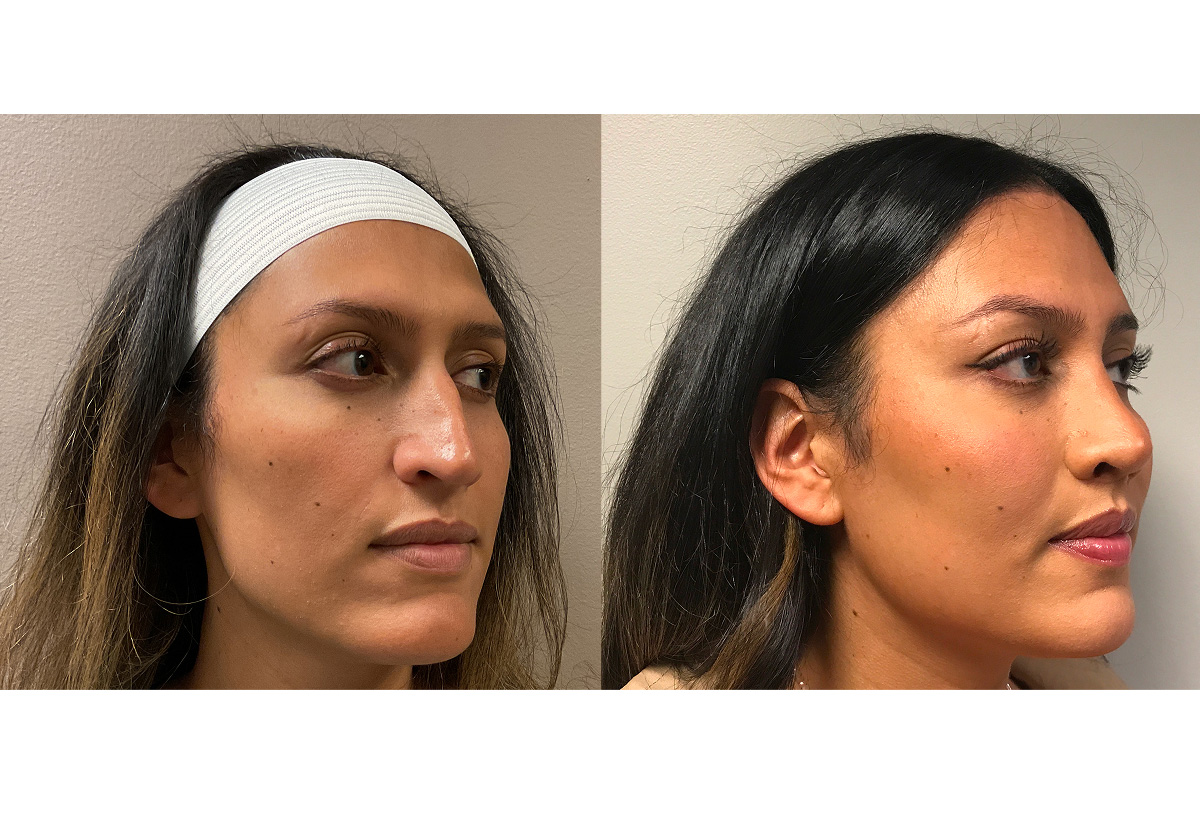
- How Does the Human Brain Recognize Gender in a Face?
- Why the Forehead Often Creates the Biggest Feminization Effect
- Why Facial Harmony Matters More Than Any Individual Procedure
- Why Different Patients Need Completely Different Surgical Plans
- How an Experienced Facial Feminization Surgeon Decides What to Change
- Scientific Research on Facial Recognition and Feminization
- Ranking the Facial Features by Their Feminization Impact
- Which Facial Feminization Procedures Does Feminization Surgeries Offer?
- Common Myths About the “Most Important” Facial Feature
- Why Surgical Planning Matters More Than Performing Every Procedure
- Schedule a Facial Feminization Consultation with Dr. Javad Sajan
- FAQs
Trying to figure out which facial feature to address first is one of the hardest parts of planning facial feminization surgery. With so many options, it is easy to focus on the wrong area and still not get the result that was expected.
That uncertainty leads many patients into procedures that change their face without truly feminizing it, because the features carrying the strongest gender signals were never addressed.
Knowing where to start changes everything. The forehead and brow region typically have the biggest impact on how gender is read in a face, but lasting, natural-looking facial feminization results come from treating the face as a whole system, not one feature at a time.
This blog breaks down the science behind facial gender perception, ranks each feature by its feminization impact, and explains how an experienced board- certified surgeon builds a plan that is specific to each patient’s anatomy.
How Does the Human Brain Recognize Gender in a Face?
Gender recognition happens faster than most people realize. Research shows the brain processes a face and assigns a gender category in milliseconds, well before conscious thought kicks in. What drives that rapid judgment is not makeup, hair color, or even facial expression. It is bone structure.
The upper face, particularly the forehead, brow ridge, and orbital rims, carries the strongest gender cues in the human face. Studies on craniofacial anatomy and facial recognition consistently show that observers rely on the upper facial region more than the lower face when making quick gender assessments. A review by researchers confirmed that the upper third of the face is the primary site of sexual dimorphism, with the forehead, brow position, and hairline being the features that carry the strongest gender cues.
The brain analyzes the face as a whole. It registers the relationship between features, not just individual characteristics. That is why a person can have feminine lips and a refined nose but still present as masculine if the forehead, brow, or jaw are sending stronger gender signals in the opposite direction.
Bone structure has greater influence over perceived gender than any cosmetic change. Makeup can soften shadows and contours, but it cannot alter the underlying skeletal architecture that the brain is reading. This is the clinical foundation for Facial Feminization Surgery.
Why the Forehead Often Creates the Biggest Feminization Effect
The forehead is one of the largest visible surfaces on the human face. In a typical masculine skull, several anatomical features make this area an unmistakable gender signal.
Brow ridge prominence: The supraorbital ridge, which runs across the forehead just above the eyes, is typically more pronounced in masculine anatomy. This ridge creates a horizontal shadow across the upper face that reads as a strong masculine feature, even when other facial areas are neutral or feminine.
Forehead slope: A masculine forehead tends to slope backward from the brow, creating a more angled profile. A feminine forehead is generally more vertical or slightly convex, giving the face a softer, rounder appearance from the side.
Orbital rims: The shape of the bone surrounding the eye socket differs between masculine and feminine anatomy. Masculine orbital rims tend to be more squared and flat. Feminine orbital rims are rounder and more open, which adds to the perception of larger, more open eyes.
Forehead height and shape: A lower or narrower forehead, often accompanied by a receding hairline, compounds the masculine appearance of the upper face.
Together, these features make the forehead one of the highest-priority targets in forehead contouring surgery. The procedures most commonly used to address this area include:
- Brow Bone Reduction: This procedure reduces or reshapes the supraorbital bossing, the prominent ridge above the eye sockets. Depending on the thickness of the frontal sinus wall, this may involve bone burring or a more involved technique that removes and repositions the frontal sinus wall for a smooth, feminine contour.
- Hairline Feminization: Lowering or reshaping the hairline reduces the perceived height and width of the forehead and creates a rounder, more feminine frame for the face.
- Transgender Brow Lift: Repositioning the brow higher on the orbital rim opens up the eye area, creates a more arched brow shape, and softens the overall appearance of the upper face.
- Complete Upper Face Transformation: For patients who need comprehensive upper face work, combining brow bone reduction, forehead contouring, and hairline feminization in a single surgical session produces the most cohesive results.
Why Facial Harmony Matters More Than Any Individual Procedure
One of the most common misconceptions about facial feminization is that changing one prominent feature will resolve the issue. In reality, the face operates as a system. Every feature affects how every other feature is perceived.
Consider this: a patient can have a refined, feminine nose, soft lips, and well-proportioned cheekbones. But if the forehead carries a heavy brow ridge and the jawline is wide and angular, those lower and upper facial structures will dominate the overall gender read. The feminine features in between essentially get overridden.
Think of it like an orchestra. The music is not defined by one instrument playing alone. The entire composition depends on how every section works together. If the brass section is playing louder than everything else, the rest of the orchestra cannot compensate for that imbalance. Facial feminization follows the same principle. When one or two features send a strong masculine signal, the harmony of the entire face is disrupted regardless of how feminine the other features appear.
This is why experienced facial feminization surgeons evaluate the entire face before recommending procedures. The aim is not just to feminize individual features. It is to create a balanced, cohesive appearance where no single feature dominates or contradicts the others. That outcome requires understanding which features are sending the strongest gender signals for each patient, then addressing those features strategically.
Facial feminization results that look natural and balanced always reflect this whole-face approach.
Why Different Patients Need Completely Different Surgical Plans
There is no universal plan for facial feminization. Two patients can walk in with similar goals and leave with entirely different procedure recommendations, because their anatomy is entirely different.
Patient A: Strong brow, soft jaw, feminine nose
This patient’s dominant masculine feature is the upper face. The forehead bossing and brow ridge are sending a strong masculine signal. The lower face is softer and does not require major modification. For this patient, the primary focus would be Brow Bone Reduction and possibly Hairline Feminization to complete the upper face transformation.
Patient B: Soft forehead, wide jaw, broad chin
This patient’s upper face is relatively neutral, but the lower face is creating the dominant masculine signal. The jaw angle is wide and the chin is broad and squared. This patient would benefit most from Jawline Feminization and chin contouring to narrow and round the lower facial frame.
Patient C: Balanced bone structure, masculine hairline
This patient has proportionate facial bones with no single dramatically masculine feature. The main issue is a high, flat hairline that frames the face in a masculine way. For this patient, Hairline Feminization or a Transgender Hair Transplant may provide a significant improvement with a relatively focused intervention. A Transgender Brow Lift could also be considered to improve brow position.
These examples show why a one-size-fits-all approach consistently produces less-than-ideal results. Facial anatomy is individual. Surgical planning must be too.
How an Experienced Facial Feminization Surgeon Decides What to Change
The evaluation process for a facial feminization consultation is far more detailed than most patients expect. A qualified facial feminization surgeon does not simply look at a photo and select a list of procedures. The analysis entails multiple dimensions of facial anatomy and patient-related factors.
Key elements evaluated during a consultation typically include:
- Facial proportions: The relationship between upper, middle, and lower thirds of the face discloses structural imbalances that may not be obvious to the untrained eye.
- Bone structure: The shape, size, and projection of the brow ridge, forehead, orbital rims, jaw angles, and chin are assessed individually and in relation to each other.
- Facial symmetry: Asymmetries that add to a masculine or unbalanced appearance are identified.
- Soft tissue: The thickness, elasticity, and distribution of soft tissue affects how surgical changes will appear after healing.
- Hairline position and shape: The M-shape recession common in masculine hairlines significantly affects facial framing.
- Skin quality: Skin texture, elasticity, plus any existing scars influence surgical planning and recovery expectations.
- Ethnic characteristics: A skilled surgeon works to feminize the face while preserving the patient’s ethnic and cultural features rather than erasing them.
- Existing surgeries: Prior procedures, whether facial or otherwise, affect what is safe and what is achievable in future surgery.
- Patient goals: The patient’s specific priorities, lifestyle, and recovery tolerance all inform the final plan.
At Feminization Surgeries, Dr. Javad Sajan develops individualized surgical plans based on this extensive review. Rather than applying a standard procedure list, Dr. Sajan identifies which features are creating the strongest masculine signals for each patient and builds a plan that addresses those features in a way that produces balanced, natural-looking facial feminization results. Patients considering a facial feminization consultation can begin with a online appointment to discuss their goals and anatomy before committing to travel.
Scientific Research on Facial Recognition and Feminization
The clinical basis for facial feminization is well-supported in the scientific literature. Understanding what research says helps clarify why certain procedures consistently produce the most significant perceptual changes.
Sexual dimorphism of the skull: Craniofacial anatomy differs significantly between sexes. The masculine skull typically features greater supraorbital bossing, a more receding forehead angle, larger and more squared orbital rims, a wider and more angular mandible, and a wider and more projecting chin. These skeletal differences are the primary anatomical basis for gender perception.
The dominance of the upper face: Research regularly shows that the upper face, specifically the forehead, brow, and orbital region, has marked influence over gender perception compared to the lower face. This supports the clinical priority given to forehead contouring and brow bone reduction in most FFS plans.
Facial recognition speed: Studies on face perception have shown that gender categorization occurs within approximately 150 milliseconds of viewing a face. This rapid processing relies heavily on global shape and structural cues instead of fine detail. It reinforces the importance of bone structure over cosmetic changes.
The impact of comprehensive FFS: A 2020 review of 220 consecutive FFS patients published in PMC (PMID: 32884190) found that a combination of bony and soft tissue procedures produced the most consistent and satisfying results. The study showed that no single procedure achieves feminization in isolation. Combining upper and lower facial procedures, as determined by individual anatomy, produced outcomes which were both aesthetically balanced and psychologically meaningful for patients.
Age-related differences: Younger patients tend to have denser bone that requires more aggressive reduction approaches. Older patients may have softer tissue and different proportional needs. A thorough evaluation considers these variables.
Ranking the Facial Features by Their Feminization Impact
Based on anatomy, facial perception research, and clinical outcomes, here is how facial features rank in terms of their feminization impact:
| Rank | Feature | Why It Matters | Relevant Procedures |
| 1 | Forehead and Brow | Strongest gender cue; processed first by the brain | Brow Bone Reduction,Forehead Contouring,Complete Upper Face Transformation |
| 2 | Jaw and Chin | Defines the lower facial frame; strong masculine signal when wide or squared | Jawline Feminization |
| 3 | Hairline | Frames the entire face; masculine recession amplifies forehead size | Hairline Feminization,Transgender Hair Transplant |
| 4 | Nose | Refines midface balance; a masculine nose disrupts overall harmony | Feminizing Rhinoplasty (part of FFS) |
| 5 | Lips | Adds softness and fullness; a thinner upper lip reads as more masculine | Lip Feminization,Trans Lip Lift |
| 6 | Trachea and Neck | Prominent Adam’s apple is a visible masculine gender marker | Tracheal Shave,Transoral Tracheal Shave |
| 7 | Cheeks | Adds contour and midface fullness; supports overall facial femininity | Fat grafting as part of comprehensive FFS |
This ranking is a general guide. For any individual patient, the actual priority of each feature depends on their specific anatomy.
Which Facial Feminization Procedures Does Feminization Surgeries Offer?
Feminization Surgeries offer a complete range of facial feminization procedures, allowing Dr. Sajan to build a fully customized surgical plan for each patient. Available procedures include:
- Facial Feminization Surgery — comprehensive FFS combining multiple procedures in one or more sessions
- Brow Bone Reduction — reshaping of the supraorbital ridge for a softer forehead
- Hairline Feminization — surgical lowering and reshaping of the hairline
- Jawline Feminization — reduction and reshaping of the jaw angles and lower facial width
- Lip Feminization — enhancement of lip fullness and shape
- Trans Lip Lift — shortening the upper lip for a more feminine profile
- Tracheal Shave — reduction of a prominent thyroid cartilage
- Transoral Tracheal Shave — tracheal shave performed through an incision inside the mouth
- Transgender Brow Lift — repositioning the brow for a more arched, open appearance
- Facial Feminization Surgery Revision — correction or refinement of prior FFS outcomes
- Hairline Lowering Scar Revision — scar improvement following hairline feminization
- Vocal Feminization Surgery — surgical modification of the vocal cords for a higher pitch
- Single Session FFS — multiple FFS procedures combined into one surgical session
- Complete Upper Face Transformation — comprehensive upper face feminization in a single procedure
- Transgender Hair Transplant — hair restoration designed for transgender patients
Common Myths About the “Most Important” Facial Feature
Several misconceptions circulate about which procedure matters most in facial feminization. These myths can lead patients to make decisions that do not reflect their actual anatomy.
Myth: One procedure can feminize every face
No single procedure works for every patient. Facial anatomy differs considerably. A procedure that creates a dramatic change for one patient may be unnecessary or minimally impactful for another.
Myth: Everyone needs brow bone reduction
Not all patients have prominent brow bossing. Some patients have a naturally flat or smooth forehead and gain more benefit via addressing other features.
Myth: Rhinoplasty creates the biggest change
The nose is a midface feature that improves overall balance, but it rarely overrides strong gender signals coming from the forehead or jaw. Nose reshaping is often more impactful when combined with other procedures rather than performed in isolation.
Myth: More procedures always mean better results
A well-planned surgical approach that targets the right features produces more natural-looking results than performing every available procedure. Over-operating can compromise facial harmony rather than improve it.
Myth: FFS should make every face look the same
The goal of facial feminization is not a standardized result. It is a face that reads as feminine while retaining the patient’s individual character, ethnic identity, and personal aesthetic.
Why Surgical Planning Matters More Than Performing Every Procedure
Every face has distinct anatomy, so successful Facial Feminization Surgery begins with careful examination rather than selecting the same procedures for every patient. At Feminization Surgeries, Dr. Javad Sajan develops personal treatment plans based on facial proportions, skeletal structure, soft tissue characteristics, and each patient’s aesthetic goals. This individualized approach assists produce balanced, natural-looking results instead of a one-size-fits-all transformation.
The goal is not to perform the most procedures. It is to identify exactly which features are driving the strongest masculine signals for a specific patient, then address those features accurately. That analysis is what separates a surgically overdone outcome from a natural, balanced, and truly feminized one.
Schedule a Facial Feminization Consultation with Dr. Javad Sajan
Understanding which features are creating the strongest gender signals in a specific face requires a trained eye and a thorough evaluation. Generic information can point in the right direction, but personalized surgical planning is what drives real facial feminization results.
Dr. Javad Sajan at Feminization Surgeries offers individualized consultations for patients at every stage of the FFS process, from those reviewing options for the first time to those desiring revision of a prior surgery. Virtual consultations are available for patients who cannot travel immediately.
To schedule a facial feminization consultation or learn more about the full range of facial feminization procedures available at Feminization Surgeries, contact the practice directly and make the first move toward a personalized surgical plan.
FAQs
Which facial feature affects gender perception the most?
The forehead and brow region affect gender perception more than any other facial feature. Research on facial recognition shows the brain highlights the upper face when making rapid gender assessments.
Does forehead contouring make the biggest difference?
For patients with prominent brow bossing or a sloped forehead, forehead contouring surgery and Brow Bone Reduction can produce the most noticeable single-procedure change in facial feminization.
Is jaw reduction always necessary?
No. Jaw reduction is indicated when the jaw angle is wide or squared and creates a strong masculine signal. Patients with narrower or softer jaws may not need this procedure.
Can a patient choose only one FFS procedure?
Yes. Some patients need only one or two targeted procedures. The appropriate scope depends entirely on individual anatomy and goals.
What if the forehead already looks feminine?
If the forehead does not present a significant masculine signal, the priority shifts to other features such as the jaw, chin, or hairline.
Is hairline lowering worth it?
Hairline Feminization can have a significant impact on overall facial framing. For patients with a high, receding, or M-shaped hairline, this procedure often produces a highly noticeable improvement.
Can fillers replace surgery?
Fillers can add soft tissue volume and temporarily soften shadows, but they cannot alter bone structure. For patients whose primary masculine features are skeletal, surgical intervention produces more lasting and substantial results.
Which FFS procedure has the longest recovery?
Brow bone reduction and comprehensive upper face surgery typically involve longer recovery periods due to the extent of tissue manipulation. Swelling can persist for several weeks, though most patients return to normal activities well before final results are visible.
What is the most noticeable FFS procedure?
For most patients, Brow Bone Reduction combined with forehead contouring produces the most visible change in gender presentation because it directly addresses the upper face features the brain uses to identify gender.
How do surgeons decide which procedures a patient needs?
A thorough facial analysis covering bone structure, facial proportions, soft tissue, hairline, and the patient’s individual goals determines the surgical plan. Dr. Sajan uses this thorough assessment procedure for every patient at Feminization Surgeries.
Does age affect FFS planning?
Yes. Bone density, skin elasticity, and tissue volume all change with age. These factors influence which techniques are appropriate and how results will appear after healing.
Can FFS preserve ethnic facial features?
A skilled facial feminization surgeon will feminize the face whilst preserving features that reflect the patient’s ethnic and cultural background. The goal is a feminine version of that individual, not a uniform result.
Is a tracheal shave considered part of FFS?
A Tracheal Shave is often included in facial feminization planning because a prominent thyroid cartilage is a visible masculine gender marker in the neck. Whether it is performed in the same session depends on the patient’s overall plan and recovery capacity.
Can multiple procedures be combined in one surgery?
Yes. Single Session FFS combines multiple procedures into one operative session, reducing total recovery time and anesthesia exposure.
How long does it take to see final results?
Swelling resolves gradually. Most patients see significant improvement within a few weeks, but final facial feminization results typically take three to six months to fully emerge as tissue settles.