📅 Complimentary Surgery Consultations Available with Our Physician Assistant – Schedule Today →
WE ACCEPT ALL PRIVATE INSURANCES
For many trans women, trans men, and non-binary people, the nose can be one of the most persistent causes of dysphoria. This is because even subtle features, like a wide bridge, prominent dorsal hump, or downward-rotated tip, can influence gender perception. Trans rhinoplasty in the USA provides a surgical solution to adjust nasal features that may appear more traditionally masculine or feminine. It is a key part of facial feminization surgery (FFS) and facial masculinization surgery (FMS).
Dr. Javad Sajan at Feminization Surgeries brings years of experience in gender-affirming procedures, including transgender rhinoplasty. He has performed over 4,000 surgeries and provided natural-looking results for transgender patients. With more than a decade of involvement in clinical research, he approaches each procedure with technical precision. This has positioned him as a preferred surgeon for transgender rhinoplasty patients across the USA.
What Is Transgender Rhinoplasty?
Trans rhinoplasty, also called gender-affirming rhinoplasty or FFS nose surgery, is a surgical procedure that reshapes the bone and cartilage of the nose. It is chosen by transgender patients who want to better align nasal features with their gender identity and overall facial proportions.
Unlike traditional cosmetic rhinoplasty, transgender rhinoplasty is planned around how nasal features influence gender perception. The surgical approach is tailored to either soften or strengthen structural elements of the nose, depending on the patient’s goals.
Dr. Sajan recognizes that every transition has a unique timeline and goals. He creates a completely personalized plan for nose surgery and supports patients throughout the process.
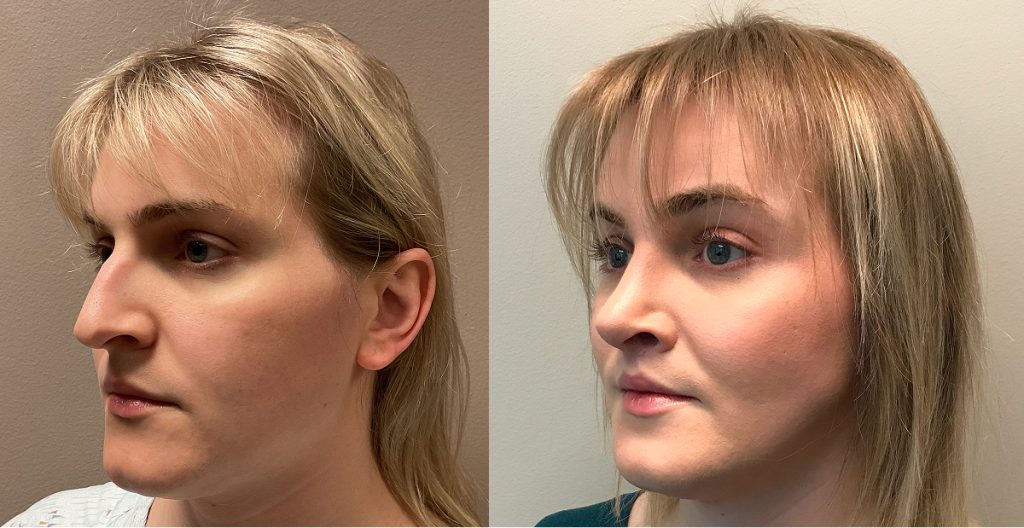
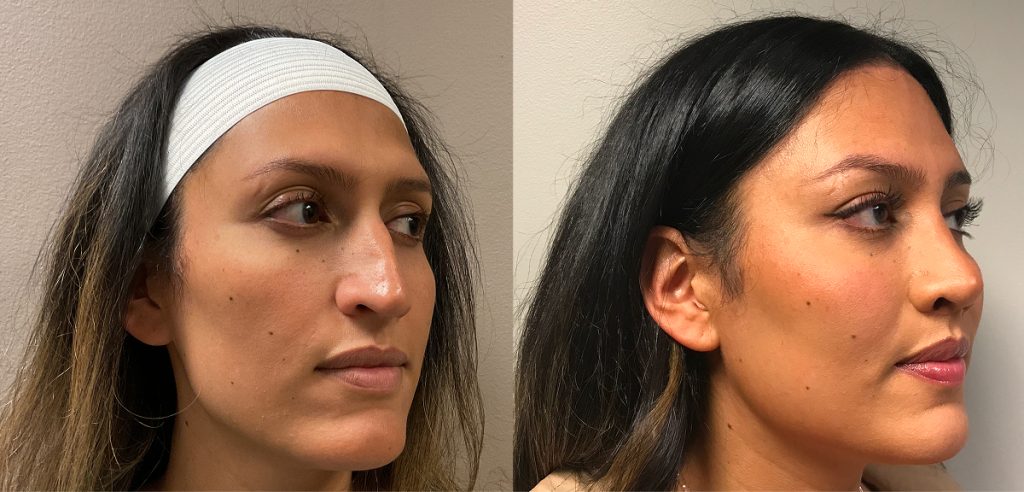
MTF Rhinoplasty (Nasal Feminization)
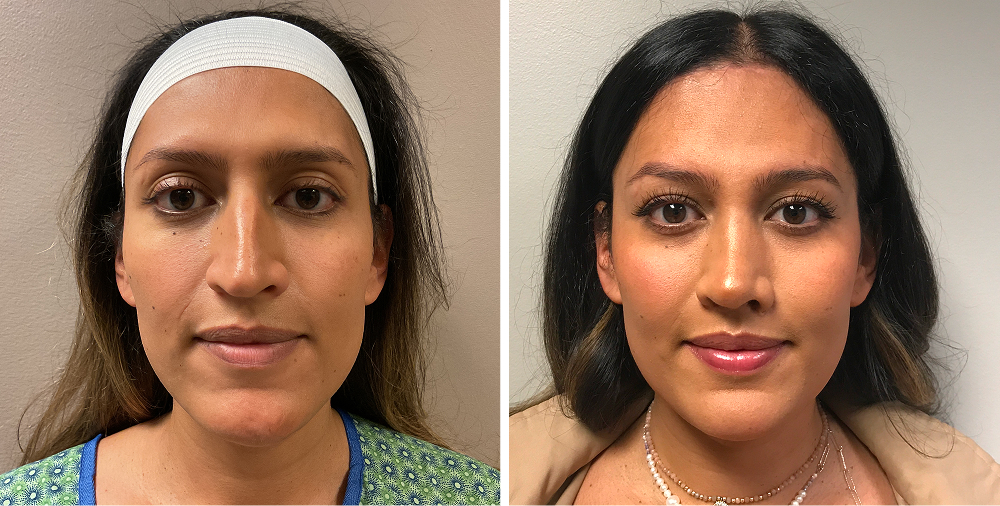
MTF rhinoplasty is designed to soften traditionally masculine nasal features. Masculine nasal characteristics may include:
- A wider or thicker nasal bridge
- A prominent dorsal hump
- Strong forward projection
- A heavier or less refined nasal tip
- Wider nostrils or nasal base
During nasal feminization, Dr. Sajan may address masculine features by narrowing the bridge, reducing the dorsal hump, refining the tip, or resizing nostrils. This procedure is often performed alongside other facial feminization surgeries, such as brow contouring, jaw reshaping, or chin refinement, to achieve facial harmony.
FTM Rhinoplasty (Nasal Masculinization)
FTM rhinoplasty focuses on strengthening nasal structure and definition to create a more masculine appearance. Features that may be enhanced during masculinizing rhinoplasty include:
- Increasing bridge height or prominence
- Strengthening the dorsal line
- Enhancing nasal projection
- Creating a straighter, more defined profile
- Broadening specific areas of the nasal structure when appropriate
Dr. Sajan may add cartilage, enhance the nasal bridge, or reshape internal structures to address these features. Nasal masculinization is often combined with procedures such as chin augmentation, jaw contouring, or forehead shaping.

Techniques Used in Transgender Rhinoplasty
Dr. Sajan chooses between two main surgical approaches based on anatomy, degree of change required, and overall treatment goals.
Open Rhinoplasty
Open rhinoplasty involves a small incision across the columella (the skin between the nostrils). It offers visibility and control, which can be helpful for detailed tip work or structural changes.
Closed Rhinoplasty
Closed rhinoplasty keeps incisions inside the nostrils. It can reduce visible scarring and swelling in select cases, though it may not be ideal for complex shaping.
Surgical Risks and Considerations
All surgeries carry some level of risk. Dr. Sajan will explain these clearly during your consultation. Rhinoplasty risks may include:
- Bleeding, infection, poor scarring (rare with proper care)
- Asymmetry or irregularities
- Prolonged swelling
- Breathing changes
- Need for revision surgery (a small percentage of patients seek refinement)
Dr. Sajan follows established surgical safety protocols, precise structural techniques, and detailed pre- and post-op guidelines to minimize these risks.
Book Your Trans Rhinoplasty Consultation with Dr. Sajan
If you’re searching for trans rhinoplasty near you, the consultation is where you find out what’s possible and what will look natural on your face. Dr. Sajan uses a structured planning process that focuses on facial proportion, nasal structure, and airflow. You’ll discuss the specific features that you want to adjust, how your goals fit into FFS or FMS, and what a realistic outcome looks like from multiple angles. Call us at (425) 380-5237 to book a trans rhinoplasty consultation near you.
FAQ
Often, yes. Many patients coordinate rhinoplasty with other facial procedures for harmony and efficient recovery. Your surgeon will advise what’s safe and appropriate.
The cost of a feminizing nose job depends on the extent of structural changes required. Pricing varies based on surgeon expertise, surgical technique, facility costs, and whether the procedure is combined with facial feminization or masculinization surgery.
A gender-affirming nose job is a rhinoplasty procedure designed to reshape the nose so it aligns with a person’s gender identity. It focuses on modifying structural features, such as bridge width, projection, or tip shape, to create a more masculine or feminine look while preserving breathing function.
A nose often appears more feminine when it has a narrower bridge, a smooth or gently sloped profile, and a refined tip with slight upward rotation. Softer contours and balanced proportions relative to the forehead, lips, and chin also contribute to a feminine appearance.