
- What Does Prioritizing FFS Procedures Actually Mean?
- Why Some Patients Do Not Need Every Facial Feminization Procedure?
- How Facial Feminization Surgeons Evaluate Faces
- Five Questions a Facial Feminization Surgeon Asks Before Prioritizing Procedures
- Which FFS Procedures Usually Create the Biggest Feminization Effects?
- Upper Face vs Mid Face vs Lower Face Where Surgeons Usually Start
- Facial Feminization Procedures Example Surgical Plans for Different Budgets
- When Combining Procedures Makes More Sense?
- What are the Key Procedures That Can Often Be Delayed?
- Common Mistakes Patients Make When Budgeting for Facial Feminization Surgery
- Why Does an Individualized Surgical Plan Matters More Than a Fixed Package?
- How Dr. Javad Sajan Develops a Personalized Facial Feminization Plan?
- Why Patients Choose Feminization Surgeries for Personalized Facial Feminization
- Taking the Next Step Toward Personalized Facial Feminization Surgery
- FAQs
Many people assume they need every facial feminization surgery procedure listed online. In reality, experienced surgeons rarely recommend every operation. Instead, they prioritize the procedures that are most likely to create meaningful facial feminization based on unique anatomy, goals, and budget.
Facial Feminization Surgery (FFS) is highly individualized. Dr. Sajan often explains to patients that the goal is not to perform the most procedures possible but rather to make the right changes for each unique face. Understanding how surgeons make these prioritization decisions can help patients feel more confident about their surgical plan, even when working within financial constraints.
Want to learn more about facial feminization surgery? Read the full guide for a clearer and more detailed overview.
What Does Prioritizing FFS Procedures Actually Mean?
In facial feminization, the bone structure, soft tissue, hairline, and proportions vary from person to person. Because of this variation, not every masculine feature has equal influence on how others perceive gender.
When a facial feminization surgeon evaluates a patient, the goal is not to check off every possible procedure. Instead, the surgeon looks at the whole face and identifies which features contribute most strongly to masculine perception. The focus then shifts to the changes that will create the greatest visual impact first.
Prioritizing facial feminization surgery procedures means developing a surgical plan that addresses the most influential features while respecting the patient’s budget and recovery capacity. This approach helps patients achieve meaningful facial feminization without unnecessary surgery.
The typical assessment process follows a logical sequence. First, the surgeon evaluates the overall face. Then comes an analysis of gender-affirming surgery perception, examining which features most strongly read as masculine. Next, the surgeon assesses bone structure and soft tissue separately. Finally, budget considerations help shape the prioritized surgical plan.
Why Some Patients Do Not Need Every Facial Feminization Procedure?
One of the most important things to understand about FFS is that more procedures do not automatically mean better results. Some patients need only forehead contouring to achieve their goals. Others may benefit most from a combination of forehead and jaw work. Some patients find that rhinoplasty alone creates the change they were looking for. And others might need hairline feminization combined with brow bone reduction.
Unnecessary surgery should be avoided for several reasons. Every surgical procedure carries some degree of risk. Recovery time increases with each additional procedure. The financial burden grows. And perhaps most importantly, operating on features that do not significantly contribute to masculine perception may not improve overall facial harmony.
A skilled facial feminization surgeon will be honest about which procedures are likely to make a real difference and which ones may not be necessary for a particular patient.
How Facial Feminization Surgeons Evaluate Faces
The evaluation process for facial feminization surgery goes far deeper than simply looking at a face. Surgeons examine multiple aspects of facial anatomy to understand how each feature contributes to overall gender perception.
Bone structure forms the foundation of facial appearance. Surgeons look at the forehead, brow bone, orbital bones, nose, cheekbones, jaw, and chin. These skeletal features create the underlying shape that soft tissue rests upon. In many cases, bone structure has the strongest influence on whether a face reads as masculine or feminine.
Facial proportions matter significantly. The relationship between the upper, middle, and lower thirds of the face affects how feminine or masculine the overall appearance seems. Surgeons measure and analyze these proportions during the evaluation process.
Soft tissue includes skin, fat, and muscle. While bone creates the foundation, soft tissue adds fullness and contour. The amount and distribution of soft tissue can either soften or emphasize underlying bone structure.
Hairline position and shape play an important role in facial feminization. A receded or uneven hairline can contribute to masculine perception, while a lower, rounder hairline often reads as more feminine.
Brow prominence is frequently one of the most influential features in gender perception. A heavy, projecting brow bone typically reads as masculine, while a smoother, flatter forehead reads as feminine.
Chin and jaw shape also strongly influence facial gender perception. A wide, square jaw and prominent chin feminization often contribute to masculine appearance, while a softer, narrower lower face tends to read as feminine.
Nose size and shape can affect overall facial harmony. Though not always the most impactful feature for gender perception, the nose sits at the center of the face and can influence how other features are perceived.
Lips and the area between the nose and upper lip can also contribute to feminine or masculine appearance. A shorter distance between the nose and upper lip, along with fuller lips, often reads as more feminine.
Neck features, particularly the Adam’s Apple, may require attention for some patients seeking complete facial feminization.
For complex cases, surgeons may use advanced planning tools such as CT imaging or 3D facial analysis to map out bone structure and plan precise surgical modifications.
Five Questions a Facial Feminization Surgeon Asks Before Prioritizing Procedures
Before developing a surgical plan, experienced surgeons work through a series of important questions. These questions help guide the prioritization process and ensure the plan makes sense for each individual patient.
First, which features create the strongest masculine appearance?
Masculine facial features vary in their impact. Some are visually dominant but less influential, while others are understated yet more important in perception.
Second, which procedures will provide the greatest overall change?
The goal is to identify the procedures that will create the most meaningful improvement in facial feminization for this specific patient.
Third, can multiple goals be achieved during one surgery?
Combining procedures when safe and appropriate can reduce overall recovery time and may offer financial advantages.
Fourth, which changes fit the available budget?
Financial realities matter. A good surgeon will help patients understand which procedures offer the greatest value and how to phase treatment if needed.
Fifth, which procedures can safely wait?
Some procedures may be less urgent than others. Understanding which changes can be deferred allows patients to plan staged treatment if necessary.
Studies on facial feminization surgery consistently report high patient satisfaction, often ranging from 85% to over 95%, depending on procedure type and follow-up duration.
Which FFS Procedures Usually Create the Biggest Feminization Effects?
Understanding these general patterns can help patients have more productive conversations with their surgeons. The table below shows how facial feminization surgeons typically prioritize procedures based on their overall impact on feminine facial features and facial harmony.
| Procedure | Impact | Priority Level |
| Forehead Contouring and Brow Bone Reduction | Very High | ★★★★★ |
| Hairline Feminization | High | ★★★★☆ |
| Jaw Feminization | High | ★★★★☆ |
| Chin Reduction | High | ★★★★☆ |
| Rhinoplasty | Moderate to High | ★★★☆☆ |
| Lip Lift and Lip Feminization | Moderate | ★★★☆☆ |
| Tracheal Shave | Specific appearance | ★★☆☆☆ |
| Brow Lift | Depends on anatomy | ★★☆☆☆ |
Upper Face vs Mid Face vs Lower Face Where Surgeons Usually Start
Surgeons often think about the face in thirds when planning facial feminization surgery. Understanding how each zone contributes to gender perception helps explain why surgeons prioritize certain procedures.
The Upper Third of the Face
The upper third includes the forehead, hairline, brow bone, and eyebrow position. This zone often has the biggest effect on gender perception.
Procedures in this zone include hairline feminization, brow bone reduction, forehead contouring, and brow lift. The forehead is one of the largest visible areas of the face, and its shape strongly influences whether the face reads as masculine or feminine.
Many surgeons begin with upper face procedures because changes to this area can transform overall facial perception quite dramatically. A smooth, rounded forehead with a lower, rounder hairline creates a foundation that makes the entire face appear more feminine.
The Middle Third of the Face
The middle third includes the nose and cheeks. While important for overall facial harmony, this zone may not always be as influential for gender perception as the upper or lower thirds.
Rhinoplasty can help create facial balance and soften masculine features like a wide nasal bridge or a prominent bump. Cheek augmentation can add feminine fullness to the midface. However, these procedures may be prioritized lower than forehead or jaw work depending on individual anatomy.
The Lower Third of the Face
The lower third includes the jawline, chin, lips, and neck. This zone can strongly influence gender perception, particularly when the jaw is very wide or the chin is very prominent.
Procedures in this zone include jawline feminization, chin reduction, lip feminization, and tracheal shave. For patients with a very masculine lower face, addressing this zone may be just as important as upper face work.
The decision about where to start depends entirely on individual anatomy and which features contribute most strongly to masculine perception for that specific patient.
Facial Feminization Procedures Example Surgical Plans for Different Budgets
Understanding how surgeons approach different budget scenarios can help patients plan their treatment. These examples are purely illustrative and not treatment recommendations. Every patient needs an individualized evaluation.
Example 1: Limited Budget Scenario
When the budget is quite limited, surgeons typically focus on the single zone that will create the greatest impact. For many patients, this means prioritizing forehead and hairline work.
A budget-conscious plan might include forehead contouring with brow bone reduction and hairline feminization. These procedures address the upper third of the face, which often has the strongest influence on gender perception. The patient can then pursue additional procedures later when finances allow.
Example 2: Moderate Budget Scenario
With a moderate budget, patients can often address two facial zones. A common approach might include upper face work combined with lower face procedures.
This plan might include forehead contouring, hairline feminization, jaw contouring, and chin reduction. Addressing both the upper and lower thirds of the face creates balanced feminization across the facial frame.
Example 3: Comprehensive Budget Scenario
Patients with more flexible budgets may be able to address all three facial zones during one surgical session or across staged procedures.
A comprehensive plan might include forehead contouring, brow bone reduction, hairline feminization, rhinoplasty, jaw contouring, chin reduction, and lip feminization. This approach creates complete facial harmony, though it involves longer surgery time and recovery.
It bears repeating that these examples simply illustrate general patterns. Actual surgical plans must be customized based on individual anatomy, goals, and medical considerations.
When Combining Procedures Makes More Sense?
Patients often ask whether it is better to combine multiple procedures in one surgery or space them out over time. The right approach depends on the individual and the surgical plan.
Combining procedures can be a practical option in many cases. It allows multiple concerns to be addressed in a single anesthesia session and a single recovery period, which can simplify planning. It also helps the surgeon assess facial balance in real time, since all planned changes are made together. In some situations, it may also be more cost efficient than staging procedures separately.
That said, combining procedures is not always the right choice. Longer surgeries require careful consideration, and not every patient is an ideal candidate for extended operative time. Some people also recover more comfortably when procedures are done in stages. Financial planning and personal schedules can also play a role in the decision.
Ultimately, the decision is made after reviewing health status, procedure complexity, and recovery needs. The goal is not to do everything at once, but to choose the approach that is safest and leads to the most natural, balanced result.
What are the Key Procedures That Can Often Be Delayed?
When the budget requires staging treatment over time, certain procedures can often wait more safely than others.
Lip lift and lip feminization may be reasonable candidates for delayed treatment in many cases. While these procedures can enhance feminine appearance, they may not be as critical for overall gender perception as forehead or jaw work.
Cheek augmentation can often be deferred. For many patients, addressing the brow and jaw creates enough change that cheek work becomes optional or can wait.
Fat grafting for facial volume is typically not the highest priority procedure. It can be added later to enhance results from primary structural changes.
Tracheal shave may be able to wait depending on how prominent the Adam’s Apple appears. Some patients prioritize this procedure, while others find it less urgent than facial bone work.
Again, which procedures can wait depends entirely on individual anatomy. A feature that could reasonably be deferred for one patient might be a priority for another.
Common Mistakes Patients Make When Budgeting for Facial Feminization Surgery
Planning for FFS involves financial considerations that go beyond procedure costs. Understanding common mistakes can help patients avoid them.
Choosing a surgeon based primarily on price can be problematic. Best facial feminization surgery requires specialized skills and experience. The lowest price does not necessarily represent the best value, particularly for complex procedures involving facial bone work.
Ignoring recovery costs catches some patients off guard. Time away from work, travel expenses, medications, post-operative care supplies, and potential needs for assistance during recovery all add to the total cost of treatment. At Feminization Surgeries, the starting cost for procedures is approximately $35,000.
Prioritizing procedures based on personal perception rather than surgical evaluation sometimes leads to suboptimal plans. A patient might feel very focused on their nose, for example, when forehead work would actually create more meaningful change in gender perception. Trusting the surgeon’s assessment matters.
Copying another patient’s surgical plan does not account for individual variation. What worked beautifully for someone else may not be appropriate for a different face. Social media can provide inspiration, but surgical plans must be individualized.
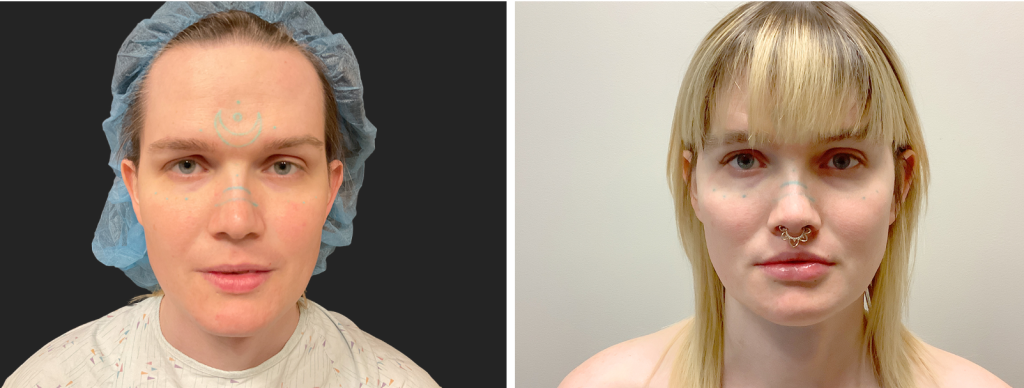
Focusing only on facial feminization before and after photos without understanding context can create unrealistic expectations. Photos show results, but they do not reveal the patient’s starting anatomy, goals, budget, or surgical plan.
Why Does an Individualized Surgical Plan Matters More Than a Fixed Package?
Facial feminization surgery does not follow a one-size-fits-all structure. However, some clinics still offer fixed packages that group the same procedures for every patient. While this may seem simple, it does not reflect how facial balance is actually achieved.
Each patient’s facial structure is different. One person may need forehead contouring surgery and hairline adjustment, while another may require jaw refinement or nasal changes. Even when concerns look similar on the surface, the underlying anatomy often leads to different surgical priorities.
Fixed packages can miss this variation. They may include procedures that add little benefit for a specific patient, or exclude areas that actually need correction. This can affect both efficiency and final results.
An individualized plan is based on facial analysis rather than a preset list. Surgeons evaluate bone structure, proportions, and soft tissue support to determine what changes are truly needed. It also allows for better planning of procedure order and recovery. In some cases, staging certain steps can improve safety and lead to more refined outcomes.
Facial feminization surgery is not about the number of procedures included. It is about selecting the right combination for each face to achieve natural and consistent results.
How Dr. Javad Sajan Develops a Personalized Facial Feminization Plan?
Choosing the right facial feminization surgery (FFS) surgeon is one of the most important steps in achieving safe and natural results.
Dr. Javad Sajan is a board-certified plastic surgeon with extensive experience in gender-affirming facial procedures. Alongside his surgical practice, he also provides flexible payment options, including insurance coverage for eligible FFS procedures and self-pay options at a reduced cost for patients choosing to pay out of pocket.
When it comes to facial feminization surgery, Dr. Sajan does not rely on standardized or fixed treatment packages. Instead, he focuses on creating individualized surgical plans based on each patient’s unique facial structure and goals.
The process begins with comprehensive facial feminization consultation. Dr. Sajan examines bone structure, facial proportions, soft tissue, and overall facial harmony. Clinical photographs and imaging help with precise planning, particularly for procedures involving bone modification.
Each patient’s goals, concerns, and budget factor into the planning process. Dr. Sajan takes time to explain which procedures are likely to create the most meaningful change and why. Patients leave consultations understanding their options and the reasoning behind recommendations.
Why Patients Choose Feminization Surgeries for Personalized Facial Feminization
Feminization Surgeries has built its reputation on individualized care rather than cookie-cutter approaches. The practice emphasizes comprehensive facial evaluation that considers the whole face, not just isolated features.
Consultations include thorough assessment of bone structure, soft tissue, and facial proportions. Patients receive customized recommendations based on their unique anatomy and goals rather than predetermined packages.
The practice’s before and after photos on the website and Instagram provide examples of individualized facial feminization results across different patients with varying anatomy and goals.
Taking the Next Step Toward Personalized Facial Feminization Surgery
The goal of Facial Feminization Surgery is not to perform the greatest number of procedures. The goal is to make the right changes for each unique facial structure. An experienced Facial Feminization surgeon develops a personalized treatment plan that balances anatomy, goals, safety, recovery, and budget to achieve harmonious, natural-looking results.
For patients interested in exploring their options, Feminization Surgeries offers comprehensive consultations with Dr. Javad Sajan. The practice accepts all private insurances and provides individualized surgical planning based on thorough facial evaluation.
To learn more about facial feminization procedures or to schedule a consultation, or call (425) 532-4898.
FAQs
Can Facial Feminization Surgery be done in stages?
Yes, staging FFS is quite common. Many patients complete their facial feminization over two or more surgical sessions. This FFS approach can make treatment more affordable and may allow for better recovery between procedures. The timing between stages varies based on individual circumstances and which procedures are involved.
Which FFS procedure usually has the biggest impact?
For many patients, forehead contouring and brow bone reduction create the most noticeable change in gender perception. The upper third of the face strongly influences how others perceive gender. However, individual results vary based on anatomy, and some patients see greater impact from jaw or chin work.
Does everyone need every Facial Feminization procedure?
No. Most patients do not need every possible FFS procedure. The appropriate surgical plan depends on individual anatomy, goals, and which features contribute most strongly to masculine perception for that specific face. A thorough evaluation helps identify which procedures will be most beneficial.
Can additional procedures be added later in Facial Feminization?
Yes, procedures can be added in subsequent surgeries. Some patients start with the highest priority procedures and add others over time as budget allows or as they see their results and refine their goals.
Is forehead contouring usually prioritized?
Forehead contouring is frequently among the highest priority procedures because the upper face strongly influences gender perception. However, prioritization depends on individual anatomy. For some patients, lower face work may be equally or more important.
How do surgeons determine which procedures are necessary?
Surgeons evaluate bone structure, facial proportions, soft tissue, and overall facial harmony. They identify which features contribute most strongly to masculine perception and develop a plan that addresses those features while respecting the patient’s goals and budget.
Can insurance influence which procedures are performed first?
Insurance coverage can affect surgical planning. Some insurance plans cover certain FFS procedures but not others, or require specific documentation. Patients often prioritize covered procedures while planning to pay out of pocket for additional procedures later.
Is it better to combine surgeries or stage them?
Both approaches can work well depending on circumstances. Combining procedures means one recovery period and may be more cost-effective. Staging procedures spreads out the financial burden and may be appropriate for patients who prefer shorter surgical sessions. The best approach depends on individual medical and personal factors.