- What is Hairline Lowering Surgery and How Does It Work?
- How Much Does FFS Hairline Lowering Cost in 2026?
- Average Hairline Lowering Cost by State
- Does Insurance Cover Hairline Lowering Surgery?
- Who is a Good Candidate for Hairline Lowering Procedure?
- What Does Recovery Look Like After Hairline Lowering?
- Hairline Feminization Before and After Expectations
- Hairline Lowering vs Hair Transplantation: Key Differences
- Why Does Choosing the Right Surgeon Matter More Than Finding the Lowest Price?
- Planning Hairline Feminization at Feminization Surgeries
- FAQs
A person’s hairline plays an important role in how the upper face looks. A higher forehead or a hairline that sits farther back can affect facial balance and how someone feels about their appearance. For many patients exploring Facial Feminization Surgery, lowering the hairline can be an important step toward creating softer facial proportions and improved facial harmony.
Before choosing any procedure, cost is usually one of the biggest questions. Hairline lowering surgery prices can vary based on several factors, including the surgeon’s experience, location, surgical complexity, anesthesia, and whether other facial feminization procedures are performed at the same time.
In the United States, hairline lowering surgery cost typically ranges from $8,000 to $20,000, depending on the treatment plan and clinic pricing. At Feminization Surgeries, hairline lowering starts at $8,995, with personalized surgical planning based on each patient’s facial structure, goals, and needs.
What is Hairline Lowering Surgery and How Does It Work?
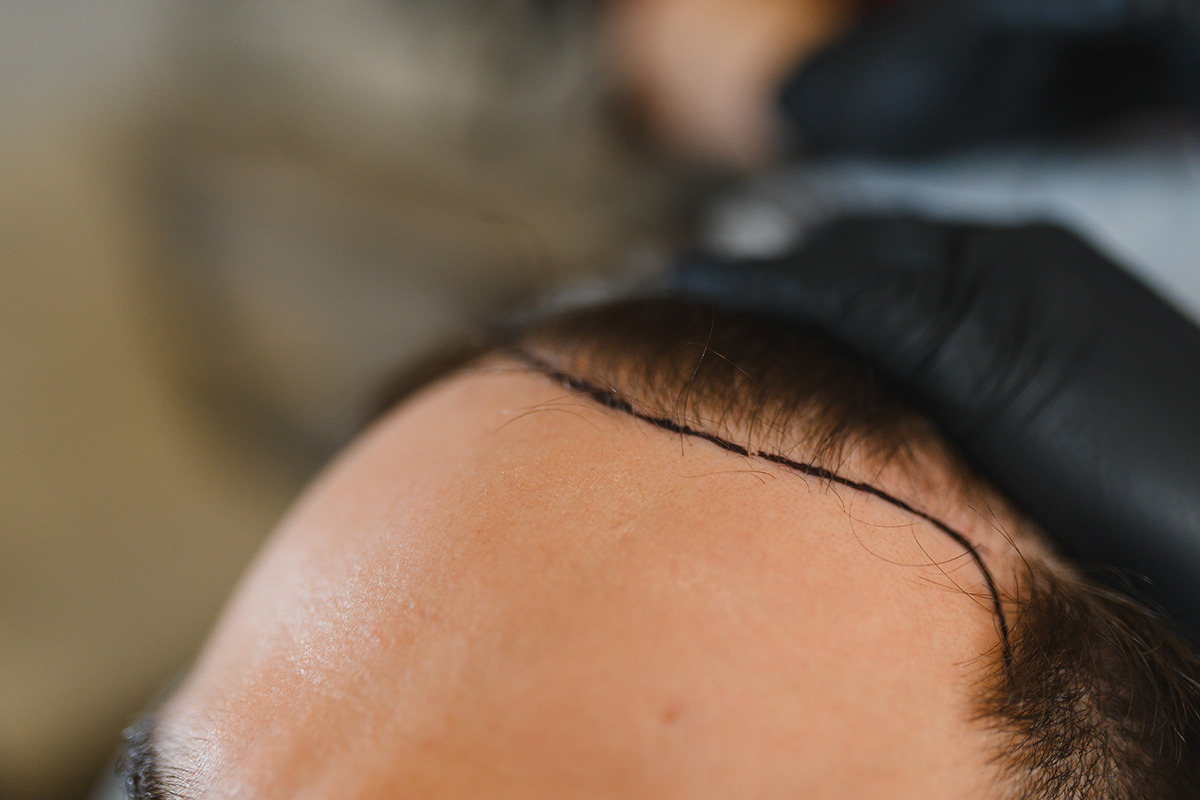
Hairline lowering surgery goes by several names. Some surgeons call it forehead reduction surgery cost. Others refer to it as hairline advancement or scalp advancement. Regardless of the terminology, the procedure accomplishes the same goal: moving the hairline forward to reduce the vertical distance between the brows and the hair.
During the surgery, a facial feminization surgeon removes a thin strip of skin from the forehead along the existing hairline. The scalp is then carefully advanced downward and secured in its new position. Most patients see their hairline move forward by 1 to 2 centimeters, though in some cases it can advance up to 4 centimeters, depending on scalp flexibility.
The hairline surgery results in a rounder, lower hairline that frames the face and softens the upper third. Many transgender women describe this change as one of the most impactful elements of their facial feminization results because it influences facial gender perception so directly.
The incision sits right at the new hairline. Surrounding hair grows through and around the scar, concealing it as healing progresses. Over several months, the scar typically fades to a faint line that becomes difficult to detect.
The hairline procedure time ranges from 90 minutes to 3 hours, depending on the technique used and whether additional procedures, such as forehead contouring or brow bone reduction, are performed during the same session. Patients receive general anesthesia or sedation, feel nothing during the surgery, and usually return home the same day.
How Much Does FFS Hairline Lowering Cost in 2026?
Hairline advancement surgery cost from $5,862 to $14,362, depending on individual circumstances.
At Feminization Surgeries, pricing for hairline lowering cost in the USA starts at $8,995 for a personalized surgical plan that includes a consultation, a customized treatment plan, and follow-up care. Understanding how that total breaks down helps explain why quotes vary so much between clinics and surgeons.
Anesthesia costs add another $800 to $1,500 depending on procedure length and whether the patient receives IV sedation or full general anesthesia. General anesthesia requires an anesthesiologist on site, which increases the fee.
Facility fees cover the operating room, sterile environment, monitoring equipment, and nursing staff. These charges range from $1,000 to $2,500 depending on the clinic and region.
Pre-operative testing and consultation sometimes appear as separate line items and sometimes get bundled into the overall quote. The same applies to post-operative care, including follow-up visits, suture removal, and any prescribed medications.
Clinics that offer all-inclusive pricing tend to provide clearer expectations upfront. Patients know exactly what the total covers before surgery day arrives.
Want to learn more about facial feminization surgery? Read the full guide for a clearer and more detailed overview.
Average Hairline Lowering Cost by State
Location plays a bigger role than most people expect. The same procedure can cost thousands more in one state than another. Here’s how the average price shakes out across the country.
| State/District | Average Cost | State/District | Average Cost |
| Alabama | $6,253 | Montana | $7,458 |
| Alaska | $9,159 | Nebraska | $6,806 |
| Arizona | $7,653 | Nevada | $7,563 |
| Arkansas | $6,521 | New Hampshire | $7,897 |
| California | $9,146 | New Jersey | $8,028 |
| Colorado | $7,751 | New Mexico | $6,888 |
| Connecticut | $7,848 | New York | $8,426 |
| Delaware | $7,580 | North Carolina | $7,083 |
| District of Columbia | $10,340 | North Dakota | $6,961 |
| Florida | $7,677 | Ohio | $7,230 |
| Georgia | $7,034 | Oklahoma | $6,456 |
| Hawaii | $11,935 | Oregon | $8,166 |
| Idaho | $7,734 | Pennsylvania | $7,425 |
| Illinois | $7,213 | Rhode Island | $7,922 |
| Indiana | $6,733 | South Carolina | $7,099 |
| Iowa | $6,839 | South Dakota | $6,790 |
| Kansas | $6,814 | Tennessee | $6,847 |
| Kentucky | $6,928 | Texas | $7,059 |
| Louisiana | $7,026 | Utah | $7,490 |
| Maine | $7,702 | Vermont | $7,873 |
| Maryland | $8,842 | Virginia | $7,417 |
| Massachusetts | $9,648 | Washington | $8,337 |
| Michigan | $7,091 | West Virginia | $6,863 |
| Minnesota | $7,279 | Wisconsin | $7,099 |
| Mississippi | $6,505 | Wyoming | $6,904 |
Does Insurance Cover Hairline Lowering Surgery?
Coverage exists for many patients, particularly when hairline lowering is performed as part of gender affirming facial feminization surgery.
Many private insurance plans now recognize facial feminization procedures as medically necessary for the treatment of gender dysphoria. When documentation supports medical necessity rather than purely cosmetic intent, insurers may cover the procedure in full or in part.
Coverage depends on the specific insurance plan, the documentation provided, and how the procedure is classified. Patients working with clinics experienced in gender-affirming care often find the approval process smoother because the surgical team understands what insurers require.
Feminization Surgeries accepts all private insurance plans and works directly with providers to verify benefits, submit required documentation, and guide patients through the approval process. For patients whose insurance does not cover the procedure, the clinic offers discounts and financing options to make treatment more accessible.
During a hairline feminization consultation, the team builds a personalized cost estimate based on the surgical plan and insurance status so patients understand their financial responsibility before committing.
Who is a Good Candidate for Hairline Lowering Procedure?
Feminization surgery is a highly personal choice, and the right candidates are evaluated based on overall health, goals, and expectations. During consultation, a facial feminization Surgeon evaluates scalp movement, hair characteristics, and personal goals to determine the most suitable approach.
Good candidates often have:
- Good scalp laxity: The scalp should have sufficient flexibility to move forward without excessive tension on the incision.
- A high or uneven hairline: Patients who want to lower or reshape a high, M-shaped, or asymmetrical hairline may benefit from the procedure.
- Healthy hair density: Strong hair growth near the incision area can help make the scar less noticeable as healing continues.
- Limited thinning around the hairline: Minimal hair loss near the temples and front hairline may support better long-term results.
Hairline lowering may not be the best option for every patient. Some factors that may affect candidacy include:
- Tight scalp skin: Limited scalp movement may make it difficult to safely advance the hairline in a single procedure.
- Thin hair near the incision: Lower hair density may make the surgical scar more visible.
- Future hair loss concerns: A family history of pattern hair loss may affect how the hairline looks over time.
For patients who may not be ideal candidates for traditional hairline advancement, other options may be considered. These can include hair transplantation to improve density or a staged approach using tissue expansion before lowering the hairline.
During a consultation, Dr. Javad Sajan reviews scalp flexibility, hair density, facial proportions, and individual goals to determine whether hairline lowering alone or a combination approach may help create balanced facial feminization results.
What Does Recovery Look Like After Hairline Lowering?
Recovery after hairline lowering surgery is a gradual process. While many patients notice a change in their hairline soon after surgery, the scalp needs time to heal fully. Understanding the recovery process can make it easier to plan work, social activities, and follow-up appointments.
Most patients can expect the following during recovery:
Swelling during the first week: Swelling is usually more noticeable in the first few days after surgery and often begins to improve within 1 to 2 weeks.
Sutures removed around one week: If traditional sutures are used, they are typically removed during a follow-up visit. The exact timing depends on the healing process and the surgeon’s instructions.
Returning to normal activities gradually: Many patients feel ready to return to work and light daily activities within 1 to 2 weeks. Strenuous activities may need to wait longer based on the surgeon’s recommendations.
Temporary scalp numbness: Numbness or changes in sensation around the forehead and scalp are common after surgery. As the nerves heal, these sensations may gradually improve over the following months.
Temporary hair shedding: Some patients notice shedding of fine hairs near the incision area during the early healing stage. This can happen as the scalp responds to surgery, and normal hair growth may return as healing continues.
Scar healing over time: The new hairline position may be noticeable soon after surgery, but the incision continues to mature for several months. As surrounding hair grows, it may help blend the scar with the natural hairline.
Taking proper care of the surgical area is an important part of the recovery period. Patients are usually advised to:
- Wash the hair gently and avoid rubbing the incision area
- Use cold compresses to help manage early swelling
- Sleep with the head slightly elevated during the first days after surgery
- Avoid activities that may put stress on the healing scalp
- Follow all post-surgery instructions provided by the surgeon
Once the scalp has healed, many patients can return to regular hair care routines, including hair coloring, with their surgeon’s approval.
Hairline lowering is designed to create a lasting change in the hairline’s position. However, future hair changes from natural aging or hair loss patterns can vary from person to person. A consultation with an experienced facial feminization Surgeon can help patients understand the expected healing process and long-term considerations.
Hairline Feminization Before and After Expectations
Hairline lowering surgery can typically move the hairline forward by approximately 1.5 to 2.5 centimeters, creating a shorter forehead and improved facial balance. While patients notice an immediate change in hairline position after surgery, swelling generally improves within one to two weeks, and sutures are usually removed after about seven days.
The incision continues to heal and mature over the following months. For patients who combine the procedure with hair transplantation, new hair growth often begins to appear within four to six months, with full results typically developing by around 12 months.
Hairline Lowering vs Hair Transplantation: Key Differences
| Feature | Hairline lowering | Hair Transplantation |
| Main goal | Reduces forehead height by moving the existing hairline forward. | Improves hair density and refines hairline shape. |
| Procedure | Advances the scalp to create a lower hairline. | Transplants individual hair follicles into targeted areas. |
| Ideal candidates | Patients with a high hairline and good scalp flexibility. | Patients with thinning areas, receding temples, or density concerns. |
| Results | Creates an immediate change in hairline position. | Results appear gradually as transplanted hair grows. |
| Recovery | Healing continues over several months as swelling and scarring improve | Hair growth develops over 6 to 12 months. |
| Common Use in Feminization | Helps create softer facial proportions by lowering the upper face height. | Helps create a softer hairline shape and improve fullness. |
Why Does Choosing the Right Surgeon Matter More Than Finding the Lowest Price?
Hairline lowering permanently changes the face. The incision sits in a visible location that only hair conceals. Technique determines scar quality. Experience determines hairline shape. Specialization determines how well the result integrates with other feminine facial features the patient may want to address.
Dr. Javad Sajan is a board-certified plastic surgeon based in Seattle who has built an international reputation for gender affirming and facial feminization procedures. His practice focuses exclusively on these surgeries, bringing the depth of experience that comes from specialization rather than generalization.
In 2011, he received the prestigious CORE Grant in recognition of his contributions to surgical research. In 2012, he created the Advanced Facial Simulator, the only validated facial simulator in the world, which is now used to train surgeons globally.
His published research appears in peer-reviewed journals including JAMA Facial Plastic Surgery and JAMA Otolaryngology Head and Neck Surgery. He has lectured for the American Academy of Cosmetic Surgery and the American Academy of Otolaryngology among other professional organizations.
Beyond his clinical work, Dr. Sajan leads United Medical Aid, a nonprofit organization providing pro bono reconstructive surgery to children with craniofacial conditions in underserved communities.
Planning Hairline Feminization at Feminization Surgeries
For patients whose high or masculine hairline affects how they feel about their appearance, hairline lowering can deliver lasting change.
Schedule a consultation with Dr. Javad Sajan at Feminization Surgeries to receive a personalized hairline lowering treatment plan and cost estimate. Our team will review your goals, evaluate your facial anatomy, discuss insurance and financing options, and answer your questions about the procedure. Call 206-990-0060 or book your consultation online today.
FAQs
Will the scar be visible after hairline lowering?
The incision is placed at the new hairline so surrounding hair grows through and conceals it. Scars typically fade to a faint line over several months and become difficult to detect in most patients.
Is hairline lowering surgery permanent?
Yes. Once the hairline is surgically advanced to its new position, it remains there permanently. The hair at the new hairline ages naturally but does not recede back.
How far can the hairline be lowered?
Typical advancement ranges from 1 to 2 centimeters. Patients with excellent scalp laxity may achieve advancement up to 4 centimeters. The amount depends on individual scalp flexibility and is determined during consultation.
How long does recovery take?
Most patients return to work within one to two weeks. Swelling resolves in the same timeframe. Sutures come out around day seven. Full scar maturation takes approximately six months.
Can hairline lowering be combined with other facial feminization procedures?
Yes. Hairline lowering is frequently combined with brow lifts, forehead contouring surgery, brow bone reduction, or hair transplantation during the same surgical session. Combining procedures allows for comprehensive facial feminization results with a single recovery period.
What is the difference between hairline lowering and hair transplant?
Hairline lowering surgically advances the existing hairline forward to reduce forehead height. Hair transplantation relocates individual follicles to refine shape and add density. Some patients combine both for optimal results.
ALSO READ
- Brow Lift Cost in US
- Brow Bone Reduction Cost in USA
- Jaw Reduction Surgery Cost in US
- Orbital Bone Surgery Cost in USA
- Cheek Augmentation Cost in the US
- Chin Reduction Surgery Cost in the US
- How Much Does a Lip Lift Cost in the U.S.?
- How Much Does a Midface Lift Cost in the US?
- How Much Does a Tracheal Shave Cost in the US?
- How Much Does Facial Fat Grafting Cost in the US?
- Gender Affirming Rhinoplasty with Dorsal Hump Reduction Cost